
Intentional Downsizing: Rituals to Let Go and Preserve What Matters
Last updated By Maya Bennett

You can carry a lifetime of stuff into a tiny home, or you can carry only what fits your life. Picture a sunlit studio with boxes stacked to the ceiling, where you're thrilled about the downsize and quietly overwhelmed by every memory inside. Before you even unzip a single box there’s another climb to make: the emotional architecture that decides whether your place becomes a calm sanctuary or a cluttered holding pen.
Key takeaways
- The Emotional Weight of Shrinking Your Space
- Preparing Your Mindset: From Pressure to Purpose
- Rituals That Make Letting Go Gentle and Intentional
- Practical Sorting Methods for Small Spaces
I want to walk you through that architecture. We’ll look at how to notice and work with the feelings that come up, how to set a mindset that makes decisions easier, rituals that make release feel respectful, practical sorting methods for very small footprints, and ways to keep the memories without keeping all the stuff. Each of the five sections mixes psychology with hands-on systems so your choices actually stick.
You’ll get quick rituals you can try in minutes, sorting systems that respect tiny square footage, and memory-preserving moves that keep the story without the bulk. Whether you’re moving from a house to a tiny home, decluttering a studio, or optimizing a camper van, these tools are designed for small spaces. Read on and turn emotional clutter into calm, and make a home that reflects what you truly want to keep.
The Emotional Weight of Shrinking Your Space
Before you lift a single box, the real work is emotional. Letting go often feels like losing pieces of your past, admitting a chapter is over, or disappointing someone-including yourself. Those reactions are normal. Call them out and they lose their hold. Understanding this emotional landscape is the first practical move toward minimalism that lasts.
This matters because unprocessed feelings become physical clutter. Guilt, duty, and “just in case” thinking fill precious square inches and make systems fall apart. When you can name why an item matters, you make choices on purpose instead of defaulting to keep, donate, or stash.
In a small space, emotion runs into hard limits. The thing that fit in a house might simply not fit in a studio. That’s not cold math, it’s design. Limits force creativity-digital archives, a single display, or passing things on-so your decisions protect how livable your space actually is.
Below we’ll map common emotional patterns, show how they tend to show up during a move or purge, and give quick questions you can use to separate story from necessity. Do that groundwork and the rest of the downsizing work gets calmer, faster, and more sustainable.
How emotions show up when you let go
Downsizing brings more than logistics. Expect guilt over gifts, anxiety about identity, and a weird ache around objects tied to routines. Your body will respond too-tight chest, brain fog, sudden tears. Knowing those reactions are normal removes a lot of the drama and keeps you moving.
Watch out for the traps. Nostalgia can freeze you in place. Perfectionism turns sorting into forever work. Decision fatigue makes you default to “keep it, just in case.” When a feeling shows up, name it. Saying “that’s nostalgia” makes it smaller and easier to work with.
Quick rituals to steady you
Two-minute breathing reset. Breathe in for four, hold for four, breathe out for eight. Repeat until your pulse settles. It clears the fog and speeds decisions.
Five-item warm-up. Pick five tiny things you can decide on fast-socks, a single mug, an old charger, a magazine, a broken pen. Win those quick battles and build momentum.
30-day maybe box. Label a box, seal it, and set a calendar reminder for 30 days. If you didn’t use anything in that time, donate or let it go without reopening the box. Turn doubt into a short experiment.
One-sentence memory trick for sentimental stuff. Photograph the object, write one sentence about why it mattered, then say out loud, “Thank you for that.” The photo keeps the image; the sentence keeps the story; the spoken thanks closes the loop.
Handling the really hard stuff
For the big emotional pieces, schedule a micro-ceremony. Brew tea, play a song you love, give each item 15 minutes. Sit with it, tell its story for two minutes, then decide. The ritual slows rush decisions and honors the object without keeping unnecessary bulk.
Use a simple decision script: Have you used this in the last year? Does this fit the life you want next? Would you buy it again today? If you can answer yes to two of those, keep it. If not, let it go.
Celebrate the small wins. After a session, mark one visible change: a cleared shelf, an empty drawer, or a donation bag leaving your door. Those tiny victories teach your brain that release feels good.
Emotional work matters as much as physical sorting. Treat feelings like weather-notice them, plan for them, and keep moving. Your smaller space will feel lighter for it.
Preparing Your Mindset: From Pressure to Purpose
If emotional clutter is the terrain, your mindset is the tool belt. Prime your brain before you touch a box and the whole process becomes a string of intentional actions instead of an ordeal. A solid mindset cuts decision fatigue, keeps you aligned with your small-space goals, and stops you from buying your way out of the problem with clever storage.
Practical preparation means clarifying values, setting realistic space limits, and naming non-negotiables for comfort and function. Add a little accountability-timelines, small checkpoints, and simple criteria that match how you actually live, not some idealized minimalism standard.
Later sections give short exercises to prime your mindset, from quick visualizations to micro-goals you can test in a single drawer. Those prep steps make the physical work faster and keep your small space intentional and joyful rather than a compromise.
Prepare your mindset: set a clear target
Picture what life looks like in your smaller space. Imagine your morning routine, where things live, and the feeling you want when you walk in. Write three concrete outcomes. Examples: "Clear counter by 8 a.m.", "One cozy reading nook", "No boxes on the floor." Use those targets like a filter when choices get hard.
Create simple decision rules that scale
Turn fuzzy feelings into quick criteria. Try a size-to-use rule: if an item takes more space than its monthly value, it goes. Or a frequency test: if you haven’t used it at least twice in the last three months, question whether it stays. Give yourself a sentimental threshold: if the item’s story takes longer than 90 seconds to tell, preserve the story, not the thing. Keep the rules few. Consistency beats cleverness.
Set the environment for clear thinking
Treat your workspace like you would for a workout. Clear a table, let in natural light, and set out three small boxes: keep, donate, recycle. Put your phone on do not disturb and set a timer for focused bursts of 25 or 40 minutes. Music or a podcast can anchor your energy. Small comforts make hard sessions feel doable.
Time, energy, and logistics planning
Plan around your energy peaks. Do the toughest sorting when you’re most alert. Book donation drop-offs or pickups before you start, so you aren’t tempted to keep things “for later.” Block micro-deadlines. A room cleared by Sunday beats an open-ended “someday” goal every time.
Anchor identity and future habit rules
Write one short sentence that names the life you’re building. Mine is: "A functional small home that supports calm and movement." Repeat it before each session. Then pick one habit to enforce the future you want. For example, when you bring anything new in, something similar must leave within 48 hours. It prevents slow creep.
Quick mental rehearsals
Before you touch a box, close your eyes and run a one-minute scene of living in the finished space. Picture finding what you need, walking a clear path, making tea on an empty counter. Tiny visualizations change how you value objects. Try it and notice the difference.
Prepare the mind and the map. The rest is logistics and momentum. Your small space will respond.
Rituals That Make Letting Go Gentle and Intentional
Rituals are small, repeatable actions that anchor emotion and create structure. When you’re downsizing, rituals turn high-stakes choices into manageable moments. Lighting a candle, playing a particular playlist, or writing a quick note before releasing an item signals to your brain that this work matters and deserves respect.
Why bother? Ritual reduces resistance. It gives permission to grieve, to celebrate, and to choose without drama. For tiny homes and studios where every object shifts the balance between comfort and function, ritual helps you honor memories while keeping the footprint minimal.
Rituals scale. You can have a five-minute letting-go routine for a weekend purge and a one-minute micro-ritual for daily maintenance. The point is repeatability. A ritualized approach turns decluttering from a chaotic event into a lifestyle habit aligned with compact living goals.
Below are compact, practical rituals built for small spaces. Pick the ones that fit you and tweak the timing to match your energy.
Spatial budget ritual (set hard limits)
Decide how much physical real estate each category gets. Three bowls. One shelf. Two hangers. Then enforce it.
- Measure the shelf, drawer, or crate you’ll allow for that category.
- Only keep items that fit into that measured space.
- If something won’t fit, choose what leaves. No exceptions.
Treat space like currency. Spend it intentionally.
48-hour placement trial
Some items only prove their value in context. The placement trial tests that.
- Put the object in the spot you expect to use it.
- Live with it for 48 hours. Use it, move around it, notice friction.
- If it interferes or you forget it, release it.
Sentiment rarely survives practical use.
20-minute category sprint
Short, intense sprints stop perfection paralysis.
- Set a 20-minute timer.
- Pick one small category (mugs, scarves, chargers).
- Sort quickly into keep, release, or repurpose piles. No dithering.
You’ll clear more in one focused push than in an afternoon of hovering.
Donation dispatch protocol
Donations stall when they lack a plan. Lock in the exit route first.
- Bag and label donation items immediately.
- Schedule a drop-off or pickup within 48 hours and add it to your calendar.
- If you don’t complete it, give the bag to a friend or neighbor to collect on a set day.
Accountability makes release happen.
One-in, one-out immediate swap
Prevent future accumulation with a live swap rule.
- For every new item you bring in, remove a similar one within two days.
- Make the removal visible: bag it, put it in the car, or mark it on your list.
This keeps your possessions steady instead of letting them creep up.
Closing snapshot ritual
End sessions with a quick proof of progress.
- Take a photo of the cleared area or a single empty shelf.
- Save it in a before/after folder or send it privately to your accountability buddy.
A visual anchor trains your brain to see empty space as gain, not loss.
Rituals make release predictable and polite. They respect memories while prioritizing the function of your home.
Practical Sorting Methods for Small Spaces
Sorting in a tiny home is not the same as sorting in a house. You don’t have spare rooms to stash indecision. Small-space systems prioritize speed, clear criteria, and spatial testing so each item earns a spot. The right methods reduce handling, avoid rework, and keep storage honest.
I’ve seen too many people try house-size strategies in a studio and end up with boxes everywhere. In a tiny home every surface counts, so measure before you keep, try items where you’ll use them, and use time-boxed sessions to keep momentum.
Useful techniques include category-first sweeps, a strict one-in-one-out habit for essentials, and triage piles that prioritize daily function. Fast heuristics like frequency of use, multi-functionality, and emotional intensity help you choose fast. Containers and labels only work if they enforce the space constraints you set.
Below are step-by-step sorting routines built for small footprints, ways to size-check items, and quick, regret-proof decisions. They’re practical, repeatable, and optimized to keep your compact home efficient and livable.
Start where the friction is
Begin with the spots that trip up your day. A cluttered counter, an overflowing entry crate, the pile that sits by the bed. Clearing high-friction zones buys immediate calm and makes everything else easier. In a tiny home, one cleared surface can feel like a full renovation. Work outward from the pain points.
Sort by category, not by room
Gather like with like. Hunt down every pair of scissors, mug, or charger across the space and bring them together. When items are consolidated you can see duplicates and patterns that individual messes hide. Three spatulas split across cabinets becomes an easy decision when they’re side by side on the table.
Triage buckets with clear outcomes
Use purposeful piles instead of vague feelings. I label mine like this: daily-use (stays accessible), occasional-use (stored in a known place), archive (one small container per category), digitize (scan or record a short memory), and release (donate, sell, recycle, trash). Make the archive container intentionally small. If something can’t fit, it needs a stronger reason to stay.
Fast heuristics that actually work
Replace long debates with quick tests you can apply in seconds.
- Condition check: damaged beyond easy repair, let it go.
- Redundancy check: if two items do the same job, keep the one in best shape.
- Space-cost test: estimate square inches versus frequency of use.
- Shared-story rule: if more than one person truly cares about it, consider passing it on.
These rules make decisions practical and repeatable.
Micro-actions that prevent re-cluttering
Set up a small staging area and handle each item only once. If you pick something up, decide and place it into its bucket immediately. Label containers and assign next steps (drop-off date, scan this afternoon, shelf X). Photograph items destined for digital keeps and log them quickly in a simple list (item, why kept, where stored). That short record stops you from re-evaluating the same object later.
Small-space examples
- Clothing: pull every shirt into one place, hold each up. If it doesn’t make you feel ready for your day, it moves.
- Kitchen tools: keep one version of each essential. Store backups off-site or in a small labeled box.
- Papers: scan important documents, shred the rest. Keep a single slim file for active paperwork.
Practical sorting is about minimizing friction and building repeatable systems. Do a little every day and the cumulative effect will calm your home.
Preserve What Matters: Memory Practices That Save Space
You don’t have to keep everything to keep the memories. Memory preservation is about translating sentimental value into compact forms that fit small-space living. Thoughtful preservation lets you honor stories without surrendering function or floor area.
Sentimental stuff is the biggest reason people hold excess. When every shelf counts, convert physical memories into digital, curated, or functional formats. That frees space and lowers stress. Preservation also clears inheritance questions and makes future decisions smoother.
Good practices include targeted digitization, a strict memory capsule with a small size limit, and story-first techniques that value meaning over mass. Photobooks, voice memos, short video clips, and annotated photos capture context without a heap of paper and trinkets. For anything you do keep physically, use tight curation rules and rotational displays so items stay meaningful.
Below are step-by-step digitization tips, a template for a compact memory box, and creative ways to honor heirlooms while respecting your space limits. Keep the memories vivid and the home livable.
Decide what deserves the physical form
Limit physical keepsakes to items that pass two tests. First, the touch test: when you hold it, does it still make you feel something immediate? Second, the utility test: can it be displayed or used in a way that adds to daily life? If the answer to both is no, keep the memory, not the object. I use a simple quota: three sentimental items per person or event. A hard limit forces priorities.
Build a small, high-quality capsule
Choose one compact container (shoebox size or smaller) per life chapter. Label it and store it in a predictable place. Inside, put only flat, truly meaningful things: a letter, one small trinket, a single photo. Add a one-paragraph note explaining each object’s story. The capsule limits accumulation by design. If it doesn’t fit, it needs a better reason to exist.
Digitize with purpose
Digitization is more than scanning. Make files searchable and human-friendly. Use a consistent naming system like YYYY-MM-DD_event_object_owner (2023-08-14_trip-necklace-Maya). Add a one-line caption in the file metadata or a tiny text file that answers who, when, and why. For texture or sound, record a 30-second video or voice memo. Keep two backups: one local and one off-site. If you do one thing well, keep the digital index tidy so you can actually find the memory.
Make memories functional
Turn bulky objects into useful items. A child’s drawing can become a laminated placemat. A grandfather’s shirt can become a cushion cover or a patch on a bag. Small textiles can be framed as art. Functional transformations preserve tactility and free storage. Be honest: if the conversion creates another item you don’t need, skip it.
Share, rehome, or document
Some objects belong with other people. Offer heirlooms to family with a short note about their story. If no one wants them, photograph and document the provenance, then let the item go. Passing things on often feels better than holding them indefinitely.
Maintain with a one-hour annual audit
Once a year spend one hour reviewing your capsules and digital folders. Delete duplicates, refine captions, and remove items that no longer feel essential. Small, regular maintenance prevents sentimental clutter from growing back.
The Takeaway
Downsizing is emotional work as much as physical work. Name the feelings, use simple rituals to steady yourself (a two-minute breathing reset, a five-item warm-up, or a micro-ceremony for hard pieces), and apply clear decision scripts so choices become habits rather than battlegrounds. Pair that inner work with space-first systems: a spatial budget for categories, 20-minute category sprints, 48-hour placement trials, triage buckets, a 30-day maybe box, and a firm donation dispatch protocol. Preserve memories with purpose: digitize thoughtfully, keep a tiny capsule for true keepsakes, and use the one-sentence memory trick to save stories without hoarding mass.
A short, practical plan to start now:
- Prime your mindset with a one-sentence anchor and a one-minute visualization of your finished space.
- Clear a high-friction surface and set out three containers: keep, release, digitize.
- Do a two-minute breathing reset, then run a 20-minute sprint (or a 40-minute block if you feel sharp).
- Use the decision script: have you used it in the last year, does it fit your next-life plan, would you buy it again now?
- Bag donations immediately and schedule pickup or drop-off before the end of the day.
- For sentimental items, photograph, add a one-line caption, and decide if it belongs in your shoebox-size capsule or a backed-up digital folder.
Take action now. Pick one surface or one category and set a timer for 20 minutes. When you finish, take a closing snapshot, label donation bags, and set a calendar reminder for your 30-day maybe box review or the donation pickup. Small, ritualized steps compound. I do this whenever clutter creeps in, and each short session returns my tiny space to calm and purpose. Commit to one ritual today and watch the square footage of stress shrink as your actual square feet become usable.
Related product reviews
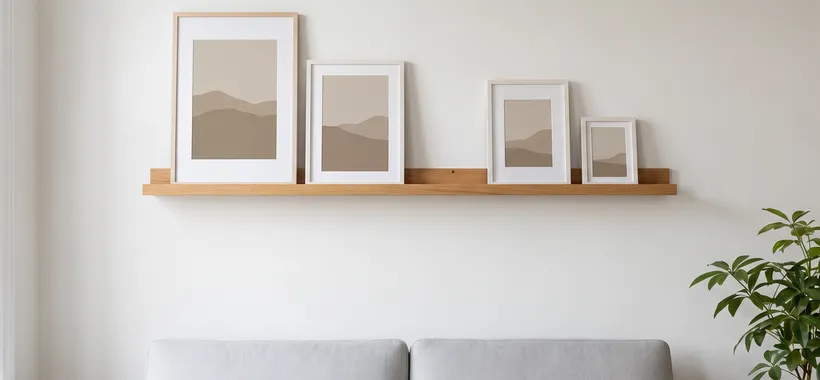
Best Magnetic Picture Ledges for Compact Living Areas
Picture ledges that actually work in compact homes: a genuine magnetic clip rail for smooth solid surfaces, strips-mounted ledges for painted walls when no drilling is welcome, and screw-mounted ledges and shelves for when drilling is fine, with what each one honestly holds.
Read more
Best Mirrored Sliding Doors with Integrated Art for Small Spaces
Discover space-saving mirrored sliding doors with integrated art that open your small space, hide clutter, add style, and unlock multifunctional rooms.
Read more
Best Compact Cooling Seat Cushions for a Downsized Home
Find slim cooling seat cushions with removable gel inserts for a downsized home, space-saving portable comfort with washable covers and quick pros & cons.
Read more