
Make Windowless Bathrooms Feel Airy with Light & Mirrors
Last updated By Maya Bennett
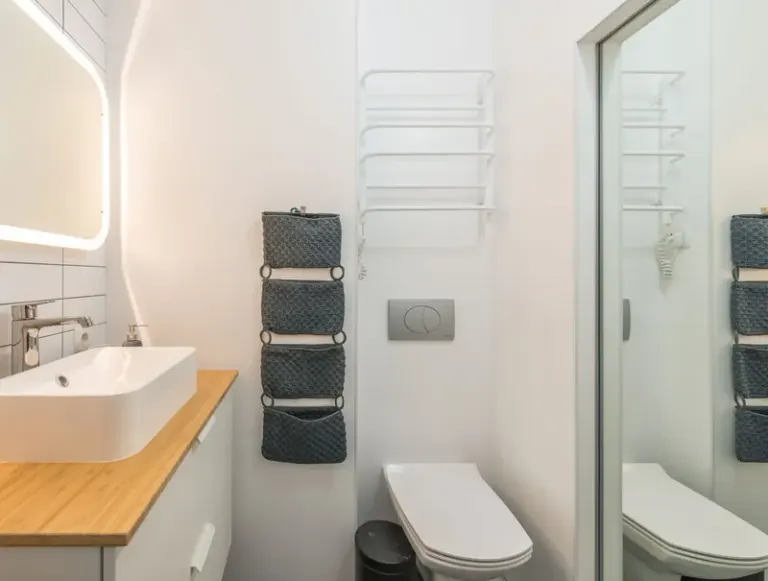
Remember the first time you walked into a bathroom with no window and felt instantly boxed in? The light is flat, the air is still, and a quick shower can feel like an unplanned spelunking trip. Now picture that same room flipped: bright, breathable, surfaces that seem to open up, routines that feel lighter, and the whole bathroom reading bigger than its actual square footage. That change is totally possible, even in the tiniest homes, with a bit of intention and a few smart design moves.
Key takeaways
- Why Light Psychology Changes Everything
- Layered Lighting: The Backbone of Airy Small Baths
- Mirror Placement: Multiply Light and Space Without Walls
- Reflective Finishes: Bounce Light, Not Attention
In this post I'm going to show you how to rescue windowless bathrooms from gloom using a mix of light psychology and practical design. I’ll walk through how to use light to shape mood and perceived space, layer fixtures so every corner earns its keep, place mirrors to multiply brightness, pick reflective finishes that bounce light without shouting, and tweak the layout so flow feels natural. These strategies are aimed at tiny homes, studio apartments, camper vans and compact baths, with a focus on multi-use solutions and small-footprint upgrades.
You’ll get ideas you can try today and plans you can space out over a weekend or two. I pair sensory notes - how a surface should look and feel - with hands-on tips that respect wiring, wet zones, and tight budgets. Read on for a cheerful, practical roadmap to turning that windowless bathroom into an airy, efficient sanctuary that feels larger than it is.
Why Light Psychology Changes Everything
Have you noticed how warm light can feel cozy but also make a small room read heavy? Light psychology is basically how different qualities of light change the way we perceive space, mood and time. In a bathroom with no windows, where daylight cues are missing, knowing a few simple rules about light gives you a huge advantage. Small adjustments to color temperature, intensity and direction can turn a cramped, clinical space into a calm, airy retreat.
Our brains use light to judge space and time. Cooler, higher-CRI light imitates daylight, makes colors pop, and helps surfaces recede visually so the room feels more open. Warmer tones are great when you want intimacy, for example around a shaving mirror or a towel nook. Use the right light at the right time and you shape both function and feeling in a tiny bathroom.
Below I’ll break down which temperatures and intensities work best for different tasks and times of day, how to avoid color clashes that make the room feel smaller, and simple ways to layer psychological cues into a tight layout. These are minimal moves with big payoff for small-space living.
How light color changes how a room feels
Light temperature is emotional. Warm light (2700-3000 K) feels forgiving and cozy. It softens skin and makes materials look richer. Cooler light (3500-5000 K) reads crisp and awake. It sharpens details and creates a sense of clarity and space. For a windowless bathroom, lean warm in the evening and cool for morning prep. If you can, use a tunable fixture or smart bulb so the room can shift from soothing amber to alert daylight depending on the moment.
Intensity, contrast and perceived volume
Brightness does more than just show you things. Even, low-contrast light helps surfaces recede and makes the room calm. High contrast and focused beams add depth and draw the eye. In a small bathroom aim for a gentle gradient instead of one harsh light. Start with softer ambient light to reduce visual clutter, then add brighter task light where you actually need clarity. That sequence guides your eye through the space so it feels larger than it is.
Light direction and how it sculpts space
Direction matters. Uplighting or concealed cove lighting lifts the ceiling visually and gives the room a breathable feeling. Backlighting behind a mirror creates a halo that separates fixtures from the wall and tricks the eye into extra depth. Side lighting at face height avoids hollow eye shadows and flatters better than a single overhead bulb. In tiny baths, these small directional choices read like architecture instead of a few stuck-on fixtures.
Quick light psychology rules:
- Keep color temperature consistent across layers when possible. Mixing temps looks busy and makes a room feel smaller.
- Use dimmers. Subtle changes in intensity recalibrate how the room reads without redesigning it.
- Prioritize high color rendering (CRI 90+) for natural skin tones and material textures. Low CRI flattens surfaces.
- Diffuse bright sources to avoid glare on glossy tiles and mirrors.
Think of light as choreography for your bathroom routines. Small shifts in warmth, intensity and angle can turn a windowless cube into a space that breathes. The point is not brighter for brightness’s sake. It’s about shaping moments: waking up, getting ready, winding down. When light supports those moments, a tiny room feels generous.
Layered Lighting: The Backbone of Airy Small Baths
Layered lighting is a three-part system that gives a room depth and function. Ambient light sets the overall tone, task light helps you see the details, and accent light adds personality and dimension. In windowless bathrooms each layer must be intentional and compact, because every fixture competes for visual calm and real estate. Done right, layers create planes that push walls outward and make the space read bigger.
A single overhead fixture flattens everything and highlights shadows. Combine recessed or soft ambient sources with focused task lighting and subtle accents and you build a lightscape that feels daylight-like in stages. This approach reduces eye strain, improves mirror work, and introduces a rhythm that tricks the eye into a more spacious environment.
Below are practical choices for small footprints and control strategies so you can tune mood and save power in tiny living scenarios.
Principles of lighting layers for small bathrooms
Think of each layer as playing a role: make the room feel open, let you work precisely, and add sparkle that reads like depth. In tiny bathrooms the challenge is balancing those roles without cluttering the ceiling or stealing wall space. Favor low-profile, multi-use fixtures and controls that let you dial scenes instead of flipping three switches.
Layer-by-layer practical guide
- Ambient (base) light. Use recessed trims or a slim flush-mount LED to wash the room in even light. Aim for roughly 150-300 lumens per square foot depending on finishes and ceiling height. Make this layer dimmable so it can sit quietly while other layers pop.
- Task light. Put it where you need clarity: around the mirror and over the sink. Vertical fixtures or integrated backlit mirrors cut shadows on the face. Target 700-1500 lumens focused at face height for makeup, shaving and detail work.
- Accent and architectural. Add narrow LED strips hidden in a ceiling cove, under a floating vanity, or inside open shelving to create depth. Lines of light lift planes visually and make surfaces recede. Keep accents noticeably dimmer than tasks.
- Shower and wet-zone. Use fixtures rated for wet or damp locations. A recessed trim or a small downlight in the shower brightens the space safely without a window. Put shower lighting on a separate switch so you can run it independently.
- Decorative or atmosphere. One small pendant, a sculptural sconce, or a halo behind a mirror gives personality. In compact baths, one carefully chosen decorative element reads as luxury rather than clutter.
Small-space wiring and control tips (practical, not technical)
- Zone your switches. Put ambient, task and accent on separate dimmers so you can create scenes. A single multi-button keypad or a smart bulb can sometimes do this without rewiring.
- Keep fixtures flush or recessed to maximize visual flow. Bulky surface mounts visually lower ceilings.
- For wet zones, choose IP-rated fixtures and talk to an electrician about placement near water sources. Safety first, style second.
Quick checklist before you shop: dimmable ambient, bright task at the mirror, subtle accent lines, separate switching for scenes, and wet-rated options in the shower. Layer these thoughtfully and a windowless bathroom will feel lived-in, breathable and larger than its footprint.
Mirror Placement: Multiply Light and Space Without Walls
Mirrors are one of the cheapest, highest-impact tools for making a windowless bathroom feel larger. Placement and scale matter more than ornate frames. A well-placed mirror captures and redistributes existing light, creates the illusion of a window, and visually doubles sightlines. For tiny homes and vans where every inch counts, mirrors act like portable windows that don't take up floor space.
The trick is to use mirrors to streamline a room instead of amplifying clutter. A large single mirror above the sink creates one uninterrupted plane that stretches perception. A mirrored cabinet gives storage and reflection in one slim footprint. Even a tall, narrow mirror can draw the eye up and make ceilings feel higher. Good mirror placement balances reflection and function so you avoid glare and confusing echoes.
Below are sizing rules for compact vanities, mirrored cabinet options, and tricks like offsetting mirrors to catch sconces or accent strips. You’ll also get tips to avoid common mistakes like reflecting messy shelves or the toilet.
Size and scale: pick a mirror that changes the room’s proportions
In a small bath the mirror should act like architecture, not decor. A long, horizontal mirror above a narrow vanity visually stretches the wall and makes the room feel wider. A tall panel that reaches near the ceiling draws the eye up and creates the sense of height. As a rule of thumb, let the mirror run almost the full width of the vanity when you can, and leave only a thin border of wall so the reflection reads as an extension of the room.
If wall width is tight, a slim vertical mirror beside the sink emphasizes height. If you want both width and height, consider stacked mirrors or a single oversized panel that bridges the sink and the adjacent wall.
Place mirrors where they guide sightlines and reveal depth
Think about what the mirror will reflect before you hang it. Aim it to catch some of the room beyond the bathroom, like a hallway or a doorway header. That extra layer makes the space feel less boxed. Avoid pointing mirrors directly at cluttered cabinets, a wet shower curtain, or the toilet bowl; those reflections shrink the calm.
If your entry is narrow, mount a mirror opposite or next to the door. It bounces the first view inward and makes the approach feel wider. In very small bathrooms, angling a mirror slightly toward a light source or a brighter adjoining room can redirect attention and brighten dark corners.
Mirrors that work double duty
Mirrored medicine cabinets and sliding-door wardrobes give you reflection and hidden storage in one slim package. A mirror-backed open shelf acts as display and reflector without adding depth. For renters, a large framed mirror hung on a French cleat is easy to remove and reuse, while adhesive mirror tiles or a series of small mirrors act like artwork that fragments and multiplies sightlines without permanent changes.
Practical hang and finish tips
Mount mirrors so the bottom sits a few inches above the backsplash to avoid splash damage, and keep the top close to the ceiling to extend perceived height. Use hanging hardware rated for the mirror’s weight; for heavy pieces use a cleat system or coach screws into studs. Choose frameless or ultra-thin frames in small spaces; heavy, ornate frames add visual weight and make ceilings feel lower.
Consider an anti-fog treatment or a small heated pad behind mirrors that sit near the shower. It’s a simple comfort that keeps the reflection usable and your routine smoother.
A well-placed mirror is a tiny design investment that choreographs sightlines, controls focus, and makes a windowless bathroom feel like it breathes.
Reflective Finishes: Bounce Light, Not Attention
Reflective finishes act like micro-amplifiers of light. Unlike mirrors, finishes spread reflection across surfaces, softening shadows and creating depth through subtle highlights. Glossy tiles, satin fixtures, and pale, semi-reflective paints can all help a small bathroom feel brighter and breezier. The trick is to use reflection to enhance space without creating hotspots or a clinical look.
Why this matters in compact spaces: when natural light is absent, every photon counts. Reflective finishes help light travel farther and interact with texture, which makes corners and recesses feel less sealed-off. But too much gloss everywhere becomes noisy, while a thoughtful mix of matte and sheen builds contrast that reads dimensional and intentional.
Below are finish pairings and application strategies that prevent overwhelm, like adding reflective accents in key zones rather than across the entire room.
Where to place reflective finishes for the biggest payoff
Think of reflective finishes like surgical tools. Use them where they create the most depth. I like polished or glazed tiles on the vanity back wall or inside a shallow shower niche so the surface reads as a receding plane. Glossy cabinet fronts on a floating vanity give visual continuity and make the unit feel lighter than a matte block. Frameless glass shower panels remove a visual barrier and let reflective surfaces do their work.
Avoid glossy floors. For safety and comfort, keep floors matte or lightly textured. That contrast between shiny vertical planes and subdued floors helps the eye travel upward, adding perceived volume.
Material choices and finish pairings that feel deliberate
Choose large-format tiles with narrow grout lines to minimize seams. Fewer lines equals a more continuous surface, which reads as expansiveness. Polished porcelain or glass tiles add a subtle sheen. If you want warmth, pair warm-toned metals (brushed brass, warm bronze) with glossy neutrals so the shine reads inviting rather than clinical.
Balance is key. Mix a high-sheen surface with a soft satin next to it so reflections layer instead of competing. For example, a polished tile backsplash, a satin ceiling paint, and a low-lustre lacquer on the vanity creates a calm, multi-dimensional look. Use small mirrored or metallic insets as punctuation, not as a pattern repeated wall to wall.
Grout color matters. Match grout to tile for a seamless plane, or pick a slightly darker grout to make tile edges pop if you want texture. Keep grout widths minimal to preserve that unbroken look.
Maintenance, glare control and honest tradeoffs
Reflective finishes amplify both light and life. They bounce illumination beautifully, but they also show water spots, fingerprints and streaks. Plan for basic upkeep: a daily squeegee for shower glass, a microfiber cloth for cabinet fronts, and nonabrasive cleaners that won’t dull the sheen.
Watch for glare. Highly reflective surfaces can create uncomfortable hotspots under direct, unshielded lamps. If you choose a lot of gloss, diffuse your lighting and position sources so reflections fall away from eye level.
Remember, more shine is not always better. In tiny bathrooms a few well-placed reflective surfaces create depth and airiness. Too many will feel busy and high-maintenance. I aim for a controlled mix: enough shimmer to open the space, and enough matte to keep it lived-in and forgiving.
Layout Tips to Maximize Flow and Perceived Space
In a windowless bathroom every inch of layout matters. Orientation, fixture scale and circulation paths determine how light and sightlines behave. A well-planned layout not only improves usability but also enhances the effect of lighting and reflective elements. Think of layout as the stage where your lighting and finishes perform; when the stage is organized, the illusion of space becomes convincing.
Even the best lighting can’t fix poor circulation. Choose wall-hung fixtures to reveal floor space, align sinks and toilets to open sightlines, and tuck storage into vertical zones to keep surfaces tidy. These moves free up visual breathing room and let mirrors and light do more work.
Below are layout patterns for narrow baths, corner vanities for tiny footprints, compact wet-room ideas, and tips for working with plumbing and electrical constraints. You’ll get sequences for what to move first, how to scale fixtures for proportion, and how to coordinate layout with lighting and finishes.
Plan the visual path first
Start by mapping how your eye travels when you open the door. In a tiny bathroom keep the most visually dominant element along that path minimal and calm. If the vanity is the first thing you see, choose a slim profile and clear counter. If the shower sits at the far wall, make that wall the feature by simplifying everything else around it. Tape out the footprint on the floor and stand in the doorway. Move around. Mock-walking the space always reveals pinch points you can't see on paper.
Choose a door that frees up space
A swinging door eats both visual and real square footage. Swap it for a pocket or sliding door if the wall cavity allows. If you can’t alter the wall, have the door swing outward. That simple change often frees up 2 to 3 usable square feet inside. A bi-fold or concertina door works for very tight entries. For renters, a heavy curtain on a tension rod can soften the threshold and be a reversible fix.
Favor linear and stacked arrangements
Line fixtures along one wall where possible. A linear layout reduces crossing traffic and creates a clear sightline that elongates the room. If you can’t run everything on one wall, stack vertically. A shallow, tall vanity plus wall-hung storage draws the eye up. Keep plumbing-heavy fixtures near the existing supply wall to avoid awkward runs that fragment the plan. If you’re thinking of moving pipes, talk to a pro early; ignoring plumbing realities makes renovations expensive fast.
Make fixtures do double duty
Every surface should pull its weight. Pick a vanity with integrated towel rails or open shelves that stage textiles vertically. Consider a fold-down seat in the shower for shaving or for placing a tray. A shallow recessed niche stores products without adding bulk. Even a slim ledge above the toilet becomes a spot for a plant or a candle, bringing life without clutter.
Use scale and negative space intentionally
Smaller fixtures, not tiny details, create breathing room. A compact wall-mounted toilet and a narrower sink remove visual mass. But don’t fill the newly freed space. Negative space is what makes a room feel airy. Keep clear zones along the main path and let one area carry the detail. A single well-placed towel ladder or a slim vertical cabinet reads intentional and tidy.
Quick practical checklist:
- Mock up the plan with tape on the floor.
- Prioritize door type and swing first.
- Line up plumbing-heavy elements when possible.
- Choose multi-function fixtures and recessed storage.
- Leave deliberate empty space along the main sightline.
One small trick I love: keep one element intentionally soft, like a wooden stool or woven basket. It breaks the clinical edge and makes even a compact layout feel curated and lived in.
Moving Forward
Light psychology is your secret weapon. Choose the right color temperature and CRI, layer ambient, task and accent fixtures, and direct light to lift ceilings and soften shadows. Then pair those lighting choices with smart mirror placement, reflective finishes on selective planes, and a layout that prioritizes sightlines and multi-use fixtures. These moves multiply perceived space without ripping out walls. I’ve used this exact combo in tiny homes, vans and studio baths and seen small rooms transform.
Start small and be deliberate. Swap in a tunable, high-CRI bulb and set up two or three scenes: a cool bright setting for morning prep, a warm dim one for evenings, and a low-accent scene for relaxation. Hang a mirror that runs nearly the width of your vanity. Add a narrow LED strip in a cove or under a floating vanity to lift planes. Consider a glossy back wall or niche while keeping the floor matte for safety. Keep fixtures flush or recessed where you can, choose wet-rated lights in the shower, and use zoned dimming so light becomes choreography instead of noise. If you plan any wiring changes, consult an electrician early to stay safe and code-compliant.
Do one thing today that gives you instant feedback. Change the bulb, move a mirror, tape out a new layout on the floor, or stick on a removable LED strip behind the mirror. Then try another upgrade over the weekend. Share your before and after photos, ask for layout advice, or sign up for a checklist if the blog offers one. Small gestures often produce the biggest sense of space, so take the first step and let light, mirrors and thoughtful layout do the heavy lifting.
Related product reviews
Best Mirrored Sliding Doors with Integrated Art for Small Spaces
Discover space-saving mirrored sliding doors with integrated art that open your small space, hide clutter, add style, and unlock multifunctional rooms.
Read more
Best Slim Recessed Medicine Cabinets for Tight Bathrooms
Find slim recessed medicine cabinets that tuck storage into walls, boost mirror light, and add adjustable shelves for tight bathrooms, vans, and studios.
Read more
Best Acoustic Art Panels with Shelving for Small Space
Discover acoustic art panels with built-in shelving for small space - absorb echoes, reclaim floor space, and stylishly display plants, books, and tech gear.
Read more