
Best Fold-Up Balcony Seats with Infrared Heaters for Studios
Last updated By Maya Bennett How we chooseAffiliate disclosure
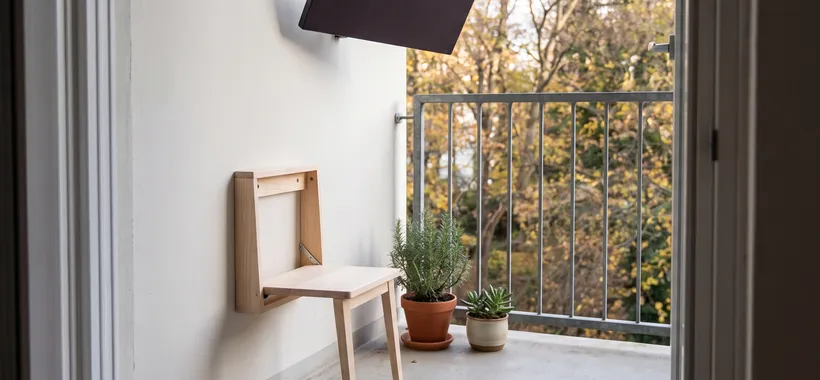
The payoff here is specific: the day a seat folds flat against the wall, the balcony gets its floor back, and with a heater aimed at the spot where that seat opens, the seat stays usable into the cold months. The honest shape of the purchase is a pair, not one gadget. You choose a fold-up wall seat that stows out of the walkway, then an infrared heater that throws its warmth onto people and surfaces instead of into open air, and you aim that heat at where the seat deploys. On my own narrow balcony, roughly one chair's worth of floor and one free wall are the whole deal, so each half has to justify the spot it takes.
The default pairing for a covered or sheltered balcony is the InSyoForeverEC Wall-Mounted Folding Chair with the Westinghouse Outdoor Electric Wall Mounted Infrared Heater. Two situations move the pick. A wall that faces the weather wants the violet art home Teak Folding Wall Seat. A balcony with no usable wall wants the BLACK+DECKER Ceiling Mounted Patio Heater, which hangs from the ceiling on its included chain and aims its heat down onto the seat instead.
The four picks at a glance
Each row pairs a mount type with the specification edge its section explains, and the trade that section also names.
| Pick | Mounts where | Spec edge | The trade |
|---|---|---|---|
| InSyoForeverEC Wall-Mounted Folding Chair | Folds up against the wall | Rated 330 lb and folds to 3cm | Needs a covered spot, a perch rather than a lounge chair |
| violet art home Teak Folding Wall Seat | Folds up against the wall | Maximum weight recommendation 440 lb, teak on stainless steel | Folds to 4 inches, triple the chair's stow |
| Westinghouse Outdoor Electric Wall Mounted Infrared Heater | Wall, ceiling, or deck rail, remote included | 1500W with a maker-rated IP55 | Needs a fixed mount and about 22 inches of wall |
| BLACK+DECKER Ceiling Mounted Patio Heater | Hangs from the ceiling on the included chain | 1500W and rated up to 54 sq ft | Needs 8 ft of clearance below, with the remote as the only control |
InSyoForeverEC Folding Chair

This is the seat for the wall with the least room to give, and its claim to that job is stow depth. Folded up on its 90-degree hinge, the InSyoForeverEC Wall-Mounted Folding Chair sits 3cm off the wall, about the thickness of a thumb between the wall and every use the wall still has.
That is the smallest stow in this lineup, and it means the folded chair costs the walkway almost nothing.
Deployed, the chair is 10.75 inches wide and 10.24 inches deep, with the seat held 35cm (about 13.8 inches) above the floor.
The support legs that carry the sit when the chair is down fold back into that same 3cm profile when it goes up. What changes is the seat's daily shape. At 35cm you get low stool height, the height you change shoes at, perch with coffee, or park a child at. It is also the height that settles the heat question, because the warmth from a radiant heater lands on a seated person's shoulders and knees. The aiming job in this pairing is a seated adult, not a standing one.
The box holds the chair, a bag of screws, and a manual that covers the mark, drill, stopper, screw sequence. Tile wants its own start, a glass drill bit to open the holes about 40mm deep before the screws sit into rubber stoppers. Two owners describe the mount going up straightforwardly, one of them with six screws. One owner mounted a unit inside a camper as a step, a reuse that fits the weight: 1.9kg, about 4.2 pounds, light enough to move between walls. The seat itself is solid wood in a white painted finish that wipes clean with a damp cloth.
Perch width is the real trade. A 10.75-inch-wide seat holds a coffee, a shoe change, and a short sit, and holds a long reading session not at all. It is also an indoor-grade piece, solid wood and paint, rated to hold 330 lb when the mount carries it. Covered or sheltered is where it belongs. Skip it for lounging, and skip it for a wall the rain reaches, because that wall is the next seat's job.
violet art home Teak Folding Wall Seat: for the weather-facing wall

Weather changes the material question, and this is the seat in the lineup that answers it. The violet art home Teak Folding Wall Seat is a teak seat on a stainless steel frame, and the maker says the teak shrugs off water, pitching the seat itself for balconies and terraces. That makes it the pick for a wall the rain reaches. It is also the sturdier sit of the two seats, with a maximum weight recommendation of 440 lb and 14 inches of real seat width, the strongest seat rating in the lineup.
It arrives assembled, so mounting is the whole setup, with no bench-building stage, and that makes it the fastest install of the two. Three of nine owners call it sturdy. Two of nine describe the detail that matters when you weigh that 440 lb figure. The legs sit on the floor when the seat is deployed, so the weight you add transfers down into the balcony floor instead of hanging off the wall hardware.
The trade is the fold. Closed, the teak seat stands 4 inches off the wall, about triple the chair's stow, the price of its 14-inch-wide sit and the 15 inches of depth the deployed seat demands. There is no backrest, so picture a small bench you sit up on rather than a chair you lean into. And unit-to-unit variance is real: one owner received a seat assembled unevenly that did not sit flat, and the useful step is holding the seat on the wall and checking it sits square before the screws commit. The model reviewed here is the Black finish. violet art home sells other colors, not reviewed here. Skip this seat when the wall has less than about 15 inches of depth to give, or when the slimmest possible stow is the whole point, because that reader is the chair's 3cm fold above.
Westinghouse Wall Mounted Heater

This is the heater half of the default pairing. Westinghouse rates the unit IP55, its own rating for wet use, and builds it from aluminum and stainless steel. Westinghouse says it withstands rain, humidity, heat, and snow and can stay outside through the season, and the specs carry the practical side from there. At 21.5 inches wide, 5 inches deep, and 3.5 inches tall, it weighs 3.3 pounds and asks for about 22 inches of clear wall.
Mounts are where this unit sets the pairing up. Wall, ceiling, and deck rail mounts come in the box along with the remote, so the positioning decision happens after you own it, without buying hardware for each guess. The deck rail option is the one for railing-side seating, aiming heat at the seat from the railing instead of the wall.
The remote is where the routine lives. Westinghouse's framing is to pre-heat the zone before you go outside, so the move is flipping it on while lacing shoes and stepping out to warmth instead of to a wait. The rated coverage is 100 square feet, a zone figure rather than a distance you can count on, and radiant heat has edges. The seat belongs inside the cone, not merely inside the rated square footage. The bulb is a someday consumable, with Westinghouse putting its lifespan at an average 5,000 hours.
The trade is the mount it demands. A wall or ceiling wants structure that carries the unit, the rail wants a railing strong enough to take it, and the wall spot wants those 22 inches. Skip it when the only free surface is a ceiling above open floor. The BLACK+DECKER below is the version that hangs there instead.
BLACK+DECKER Patio Heater

The BLACK+DECKER Ceiling Mounted Patio Heater is the pick for the balcony with no wall to give, because it does not mount sideways at all. It hangs from the ceiling on the included mounting hook and chain, and its heat falls straight down onto the seating beneath, geometry no other unit in this lineup offers. The unit is a 16.73-inch dish, 3.96 pounds, and once it hangs, the walkway below never sees it.
The measurement gate is headroom, and BLACK+DECKER's placement rule asks for at least 8 feet from the ground and 20 inches from the ceiling, so a low pergola rules it out before wattage ever comes up. Its rated coverage is up to 54 square feet, and the maker frames the honest boundary itself, calling the unit not powerful enough to heat entire rooms.
There is no switch on the unit. It runs through the remote only, and the remote needs two AAA batteries that are not in the box. An LED light built in doubles the evening's role. Click it on from inside, and the seat zone gets light and warmth together. Two owners describe the light it throws, bright enough to be an evening feature, and for one of them more of it than expected.
Reach is where that boundary turns practical. Two of ten owners report having to sit close to the unit to feel the warmth. The dish warms the zone beneath it, so where it hangs is where the warmth lands, and choosing the hang spot for the seat matters more than how many square feet the rating covers. Two owners also report the unit quitting within the first month, which makes the 1-year limited warranty worth knowing before you hang it, not after. Skip it under 8 feet of clearance, and run the outlet check below before you buy.
Matching the heater to your balcony (and mounting both safely)
Radiant heat is the reason this pairing works on a balcony at all. Infrared travels in straight lines and lands on whatever it touches, so it warms people, chairs, and walls instead of trying to raise the temperature of outdoor air, which drifts away as fast as you make it. Wind matters for a different reason: it strips warm air from your body's surface, and the response is aiming the cone closer, not switching technology. That is also why a heater that feels strong indoors can feel weak outside. Indoors it was warming the room's air. Out here, the only warmth that counts is the kind that lands on you.
Let exposure pick the heater first
The first question is what sits overhead, and it outranks every wattage figure. Is there a roof or glazing above the heater, or does the wall face open sky? The Westinghouse's IP55 makes it the pick when rain can reach the unit. The BLACK+DECKER hangs from a ceiling, which answers exposure structurally: if you have the ceiling, you already have the roof over the heater. A covered balcony has both in play, and then the headroom and outlet checks decide.
What a fold-up seat asks of the wall
With any fold-up seat, the mount decides lifespan: hinges, fasteners that can carry the sit, corrosion-resistant hardware, and a seat angle worth sitting at. Some designs tuck totally flat when stowed, others keep a small clearance, and the difference is what the wall still shows when nobody is sitting. Both seats here ask the wall the same question: can it carry the rating? Screws belong in studs, masonry, or blocking, not in whatever surface happens to be behind the paint, and the anchor pack that suits your wall is yours to supply. For the teak seat, confirm the anchoring hardware before the first hole.
The 1500W reality check
Both heaters draw space-heater-class power, 1500W. The Westinghouse lists 13.64A at 110V. BLACK+DECKER specifies 15A at 120V, a grounded 3-prong outlet, and a 6-foot cord, so the outlet placement and the hang spot negotiate. Before mounting either, check what else shares the circuit, because a heater holding steady until the refrigerator kicks on is the classic version of this problem. If the wiring situation is unknown, that is a question for someone who can trace the circuit, not a hopeful guess. And one ownership note from BLACK+DECKER: the brand does not sell replacement lamps for the unit, and compatible halogen tubes are the findable alternative online or at a hardware store.
If you cannot drill
Both seats in this lineup demand drilled, load-carrying anchors, so a no-drill balcony is a no-seat balcony from this lineup. Mounting a seat on a surface that cannot carry the rating is a way of buying a hazard, not a workaround. The no-wall-drill route that remains is the Westinghouse's deck rail mount, which clamps the heater to a sturdy railing instead of the wall, and the railing itself needs the same load treatment before it hosts a 1500W appliance. Between the two halves, that railing clamp is the whole reversibility menu here.
One check settles both halves before you buy either. Tape the deployed seat's footprint on the floor, sit where you would actually sit, and confirm that a heater aimed from its plausible mount reaches that spot. Rehearse the fold first, and make sure nothing that lives on the balcony, a railing, a planter, a door swing, sits in the seat's path.
Questions that decide the purchase
Can either seat stay out in the rain?
Treat rain as the dividing line between the two seats. The teak seat is the one with weather in its story, on the strength of the maker's water-resistance claim and its balcony-and-terrace positioning. The chair is the covered-or-sheltered option, and its place is where the wall stays dry. The heater side of the purchase asks the same exposure question, so one honest look at your wall's weather answers both halves.
What does a 1500W heater ask of my outlet?
Two numbers carry the wattage. The Westinghouse draws 13.64A at 110V, and the BLACK+DECKER specifies 15A at 120V on a grounded 3-prong outlet, with a 6-foot cord setting its reach. On the circuit side, the question is what else shares the breaker, and the answer should include the kitchen appliances. If the circuit's contents are unknown to you, hand that question to an electrician before mounting anything.
How far does the heat actually reach?
Both heaters carry rated zone figures, the Westinghouse at 100 square feet, the BLACK+DECKER at up to 54. Treat them as room-zone ratings, not reach guarantees. Radiant warmth travels in a short, directional band: you feel what lands on you, and little of what passes beside you. That is why the pairing test above answers this one with the mount you can actually install, not with the coverage figure.
Guides that use these ideas
Off-Grid Tiny Home Maintenance: Your Seasonal Checklist
Stay powered and prepared year-round. Get seasonal checklists for solar, water, heating, and emergency prep to prevent costly off-grid system failures.
Read more
Zoned Climate Control for Your Room: Targeted Heating, Cooling & Energy Savings
Learn to zone a single room for targeted heating and cooling - device picks, airflow fixes, insulation tips and energy tips to stay comfy and cut costs.
Read more
Layered Lighting for Narrow Window Bays: Brighten & Expand Your Room
Learn how to layer natural, task, and ambient lighting, use reflectors and multifunctional seating to brighten narrow window bays and visually expand your room.
Read more
Warm, Dry Floors: Underfloor Insulation for Raised Tiny Homes
Keep floors warm and mold-free in raised tiny homes. Pick the right underfloor insulation, plan ventilation, and seal out moisture for lasting comfort.
Read more