
Best Magnetic Fridge-Door Spice Racks for Small Space Kitchens
Last updated By Maya Bennett How we chooseAffiliate disclosure

I'll be honest. For years my spice collection looked like an aromatic traffic jam on the countertop, jars clinking like tiny protesters every time I reached for the kettle. One evening of reorganizing taught me that the calm I wanted in my kitchen wasn't about getting rid of spices; it was about where they lived. Vertical surfaces, especially the fridge door, turned into a blank canvas where clutter became a neat, usable display.
In this guide you'll learn how to pick magnetic, fridge-friendly solutions that tuck seasonings out of the way while keeping them easy to grab. I'll talk about the satisfying tug of a strong magnet on steel, the clean lines of slim shelving, and the little click when a jar snaps into place. You’ll see how different approaches solve different problems, from shallow pull-out drawers to magnetic jars that cling to the side of the fridge.
Expect practical tips and honest trade-offs. I group options from anchored shelving to jar systems and gear made for life on the road. Read on for picks that cut visual noise, keep things minimal, and give you back counter space and peace of mind.
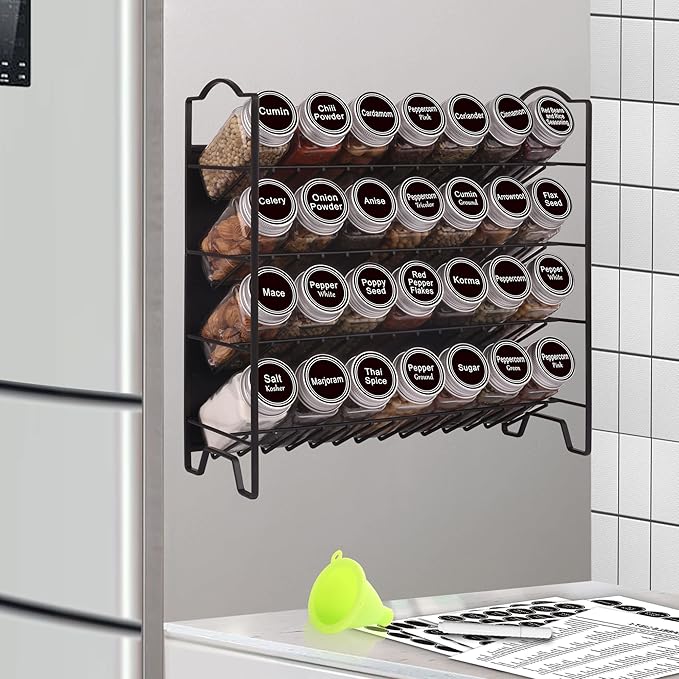
SWOMMOLY Magnetic Spice Rack Organizer with 28 Glass Spice Jars, 396 Spice Labels with Chalk Marker and Funnel Set for Refrigerator, Metal Fridge, Microwave, Cabinet, Countertop,12.9" W x 12.4" H
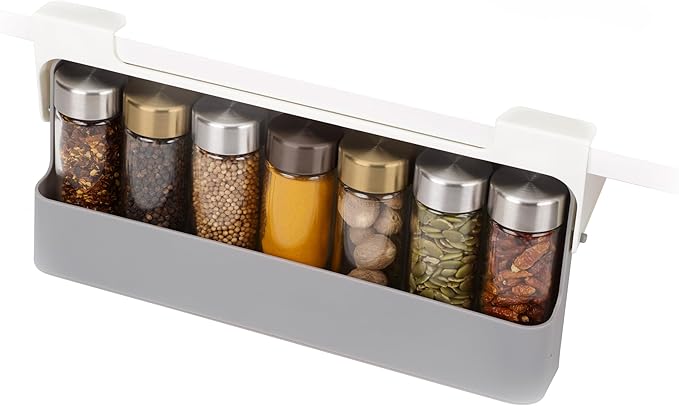
Joseph Joseph Spice Rack Organizer - Under-Shelf Kitchen Cabinet Storage Solution for Spices, Grey

Spectrum Diversified Scroll Spice Wall Mount Rack, Black

YAMAZAKI Home Tosca Magnetic Spice Storage Rack Organizer For Fridge - Steel + Wood
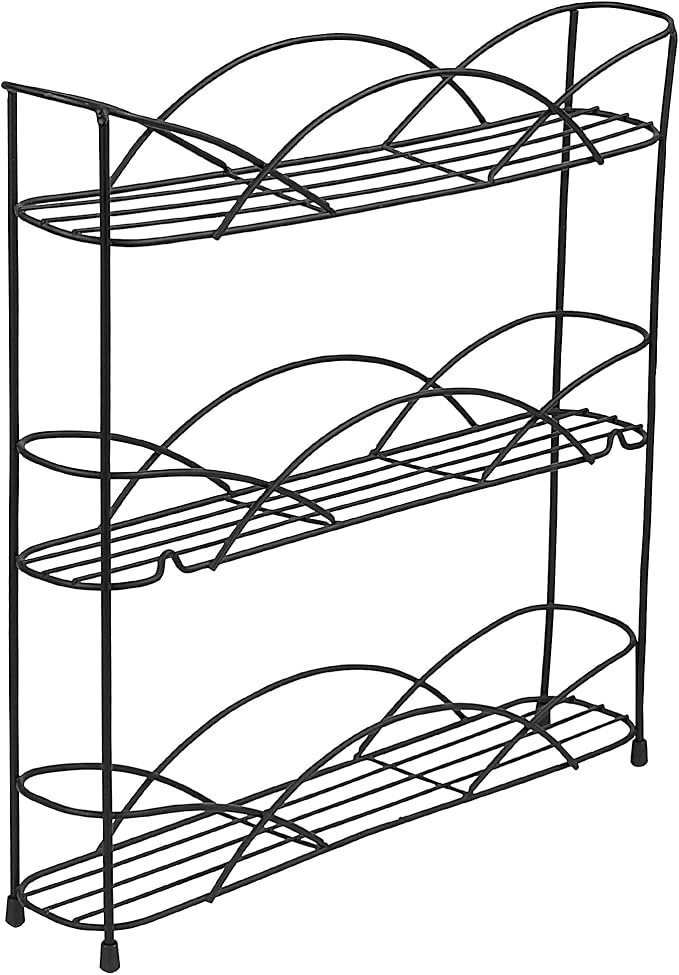
Spectrum Diversified 3-Tier Spice Rack Shelf Organizer for Kitchen Countertop, Pantry, Bathroom, or Closet with Optional Wall Mount, Black
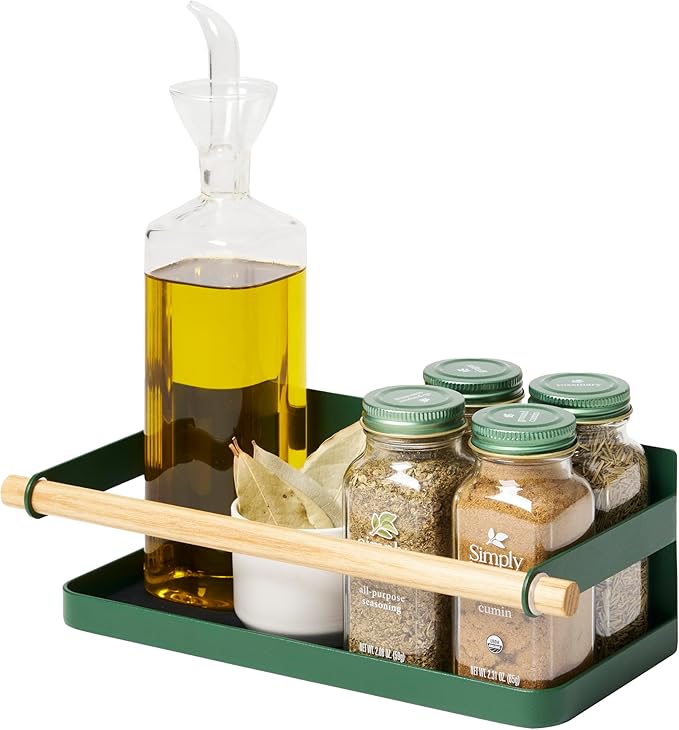
YAMAZAKI Home Tosca Magnetic Spice Storage Rack Organizer For Fridge - Steel + Wood
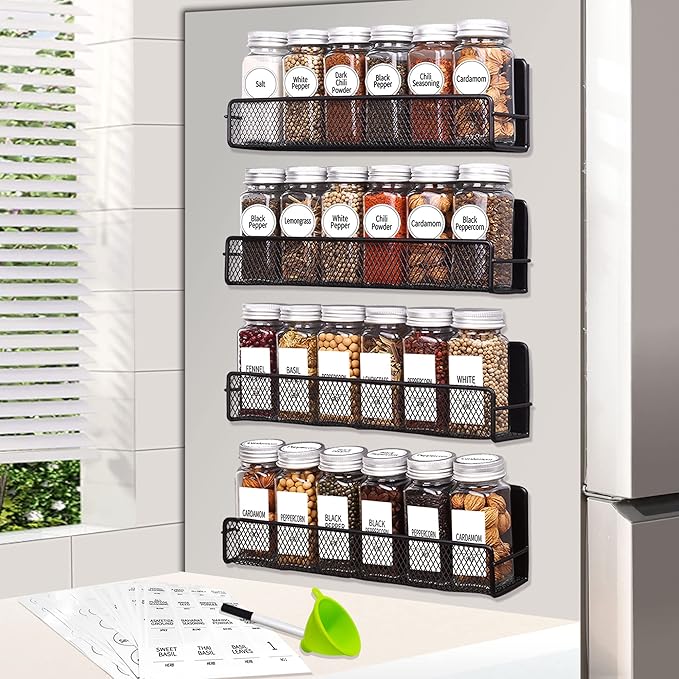
Churboro Magnetic Spice Rack for Refrigerator with Spice Jars- Includes 24 Pcs 4 OZ Seasoning Containers with Labels, 4 Space-Saving Magnetic Shelf for fridge- Perfect for Small Kitchens, Apartments
Our Top Pick
SWOMMOLY Magnetic Spice Rack Set is built for kitchens where every inch matters. The slim magnetic panel holds 28 clear glass spice jars in about a 12.9" by 12.4" footprint, so you can keep a full collection without sacrificing counters or cabinets. Strong magnets stick to fridges, metal cabinets, microwaves, and other steel surfaces, so installation is instant and drill-free. The kit includes 396 labels and a chalk marker, which makes sorting and relabeling quick as you change up blends.
This set really shines if you need flexibility. The jars lift off for refilling and can sit on the counter or slide into a drawer when you want them out of sight. The funnel and marker make setup and upkeep painless. With a 4.8-star average rating, people praise how much countertop space it frees and how much easier cooking gets when spices are organized, visible, and within reach.
Key benefits and standout features
- Compact magnetic system mounts to metal surfaces, no drilling required. Ideal for rentals, camper kitchens, and studio layouts.
- 28 clear glass spice jars. Being able to see contents speeds prep and cuts down on duplicate buys.
- 396 pre-printed labels plus a chalk marker. Flexible labeling for blends, herbs, and custom mixes.
- Funnel included for clean refills. Helps keep counters tidy.
- Slim footprint (12.9" W x 12.4" H). Uses vertical space instead of spreading out horizontally.
- Strong magnets and sturdy metal frame. Meant to stay put on fridges, microwaves, and metal cabinets.
A compact, no-drill solution that turns wasted vertical space into a neat, accessible spice hub. Perfect for anyone squeezing the most out of a small kitchen.
Magnetic Spice Racks That Keep Seasonings Within Reach
A magnetic rack can turn a cold, flat surface into a working pantry. When counter space is tight, every vertical inch counts. A well-designed rack puts spices at eye level, cuts the number of steps while you're cooking, and clears the prep area for actual chopping. The payoff is immediate: less clatter, a slimmer profile, and a quiet order where each bottle has a known home.
When you're choosing a magnetic rack, check magnet strength against the weight you plan to store. Think about shelf depth and lip height so jars don't tumble when a door swings open. Materials matter too: powder-coated steel resists fingerprints and chips, while a smooth matte finish reads minimal and tidy. Also double-check how the rack mounts and whether it will interfere with door clearance or handles.
In the reviews below I compare load capacity, ease of installation, and how each design fits into a calmer kitchen routine. Look for notes on durability, how the rack feels when you grab a jar, and the small details that stop things from getting messy again.
Joseph Joseph Spice Rack
This under-shelf pull-out spice rack tucks under an existing shelf to free up cabinet and counter real estate. The pull-out drawer has a built-in stop, so your go-to spices slide out smoothly and stay put while you cook. It holds up to seven standard spice jars (max 2" x 2" x 4.75") and wipes clean with a damp cloth.
What makes it useful is the tool-free installation. It uses non-marking 3M VHB tape and slides hooks over the shelf edge, so you avoid drilling into rental cabinetry. Follow the steps: clean the shelf underside, press the tape firmly for 30 seconds, and wait 24 hours before loading. Adhesive performance varies though. Many people find it secure, but some report tape failing under heavier glass jars or on textured shelves. Measure shelf width and thickness first (fits units over 12.6" wide, max shelf thickness 0.75") to avoid surprises.
This rack is great if you use a handful of staples and want them within easy reach. Pros: compact footprint, smooth pull-out action, easy install, good visibility. Cons: limited to standard jar sizes, modest capacity, and adhesive can be hit-or-miss with heavy loads.
If your counter feels crowded and you want favorites close at hand, this is a practical add-on. Measure, prep the shelf, and consider reinforcing the tape if you load it with heavy glass jars.
Spectrum Scroll Spice Rack
This slim, three-tier wall rack is equal parts decorative and practical. The black steel scroll design looks nice and only takes up about 12.5" by 2.75", so it slips into skinny gaps - between a stove and a window, beside a sink, or on a vehicle wall - and frees up countertop or cabinet space. Open wire shelves let you spot what you need at a glance.
What stands out is versatility. Mount it on a wall, hang it inside a pantry door, or use it freestanding on a counter with the rubberized feet. It fits most standard and half-height spice bottles. There’s roughly 4 3/4" of clearance between tiers, so the top shelf handles taller jars and the lower shelves work best for slimmer containers. It even doubles as a nail polish or small-jar organizer if you want multi-use storage.
Who should consider it: cooks who want neat, visible storage without a big footprint. Pros: vertical storage that saves counter space, included mounting hardware, durable steel with decorative styling. Cons: narrow shelf spacing limits very large jars, may need drywall anchors for secure installation, and it can feel light until stocked.
Overall, a smart, budget-friendly way to put vertical real estate to work.
YAMAZAKI Tosca Spice Rack
When counters are in short supply, the YAMAZAKI Tosca Spice Rack almost feels magical. It clamps to any metal surface with a very strong magnet and turns the side of the fridge into usable shelving. The mix of alloy steel and a wooden dowel gives it a modern, minimalist look that blends in rather than shouting. I stuck it on my fridge and suddenly had daily spices, a small oil bottle, and even a jar of honey within arm’s reach while I cooked. The floating shelf keeps counters clear and supports about 3.3 pounds, so it handles more than you'd expect.
Practical and flexible - that’s what sold me. Use it for spices, glass jars, Pyrex lids, or even skincare next to a metal bathroom cabinet. Pros: rock-solid magnet, clean design, easy setup, and useful depth for slightly larger bottles. Cons: it only works on magnetic surfaces and it’s not big enough for paper towel rolls or oversized containers, so check dimensions if you plan to store bulky items. A few customers mentioned adding S-hooks to the dowel for utensils, which is a neat trick I tried and liked. If you want a tidy, attractive way to reclaim counter or cabinet space, this is a smart buy.
Compact Spice Racks for Minimalist Counters
A compact rack does more than save surface area. It’s a commitment to restraint. Choosing a small, well-proportioned rack preserves visual simplicity while keeping your most-used seasonings accessible. In tight kitchens the right silhouette can make the counter feel bigger, not cluttered. There’s a simple pleasure in reaching for one predictable spot where everything fits.
When evaluating compact racks, compare capacity to footprint. Stacking or tiered designs multiply storage without using more surface area. Match materials and finish to your kitchen’s tone - warm wood softens while matte steel feels deliberate and modern. Think about fixed versus adjustable tiers if you want flexibility later.
In the reviews that follow I weigh footprint against capacity, stability, and how each piece preserves an uncluttered look. I call out items that stay calm while offering sensible organization.
Spectrum 3-Tier Spice Rack
This Spectrum 3-tier unit feels like a mini renovation when counter space is limited. It uses a very slim footprint (about 13 inches wide and under 3 inches deep) so it tucks into narrow gaps along a counter, beside a stove, or on the wall without taking up precious surface area. Open wire shelves make spotting jars easy, and rubberized feet keep it steady when used freestanding. I liked that it includes wall-mount brackets and basic hardware - mounting it frees counter space immediately.
Practical pros and cons matter. Pros: space-sparing profile, multi-use (kitchen, bath, craft), easy visibility, and simple wall-mount option. Cons: lower shelves are narrower for taller or oversized jars, the unit is light so anchors or adhesive help on drywall, and smaller bottles can rattle unless tightly packed. For best results, mount it or place it in a corner and reserve the top shelf for taller jars. I ended up ordering a second one to create a stacked look that keeps things within arm’s reach.
If you want an inexpensive, tidy way to reclaim counter space, this is a solid pick.
YAMAZAKI Tosca Rack
This magnetic spice rack from YAMAZAKI is compact but surprisingly capable. The steel shelf clips to any metal surface with a strong magnet and holds up to 3.3 pounds, so a row of spice jars, a small oil bottle, or nightly skincare essentials stay within arm’s reach instead of crowding the counter. The footprint (about 10.8" wide by 5.1" deep and 3.35" high) fits the slim side of a refrigerator, a metal locker in a vehicle, or a utility panel in a studio. Clean steel with a wooden dowel gives a modern, Japanese-inspired look that complements small interiors.
Practical, not gimmicky. Attach it and you immediately create usable horizontal storage without drilling or adhesives, which is great for renters. Pros: strong magnet, solid steel construction, stylish minimal design, and multi-use (kitchen spices, lids, cosmetics, even utensils hung from S-hooks). Cons: only works on magnetic surfaces, don’t overload past 3.3 lb, and the 3.35" depth won’t fit very tall bottles.
If you want an easy, reversible way to reclaim counter space and keep everyday items visible and reachable, this is a smart, space-first solution.
Magnetic Spice Jars: Tiny Containers with Big Impact
Magnetic jars are the minimalist dream for spices. They cling to metal, clear the counter, and their uniform shapes create a quiet display. The sensory details matter: clear glass catches light, lids that click shut reassure you that things are sealed, and aligned labels make grabbing intuitive.
When shopping for jars, pick airtight seals and durable magnetic bases. Glass or food-safe plastic that resists staining helps you identify contents at a glance. Think about jar capacity so you’re not refilling constantly, and check the label system to match your visual approach. A small funnel and a marker make refills neat instead of messy.
Below I compare jar quality, magnetic hold, label clarity, and how each kit fits into a cohesive setup. The best sets feel considered and calm, cutting visual clutter while making spice selection a quick, pleasant gesture.
SWOMMOLY Magnetic Spice Rack
If your kitchen is the size of a shoebox, this 4-tier SWOMMOLY magnetic spice rack is a lifesaver. It clamps to metal with a very strong magnet and holds up to 22 pounds, so you can load 28 square 4 oz glass jars without worrying about a tumble. The jars are airtight and lead/BPA free, lids offer a shaker or pour option, and the kit includes a silicone funnel, chalk marker, and 396 waterproof labels (350 pre-printed, 46 blanks). The black matte metal frame looks tidy while taking up only about 13 by 12 inches of vertical real estate.
What makes it stand out is how much cabinet and counter space it frees. Mount it on the fridge, the side of a microwave, or the inside of a pantry door and you instantly free shelves for plates, pots, or that never-used appliance. Pros: enormous label pack, uniform glass jars for a clean look, super-strong magnets, easy no-drill install. Cons: it gets heavy when fully loaded, the magnets are so strong they can be fussy to level, and there’s no built-in screw option for non-metal surfaces. Helpful tip: transfer jars one at a time and tuck a small moisture packet in with hygroscopic spices.
This rack is ideal if you cook often and hate digging through mismatched bottles. Alphabetize as you fill - it genuinely feels calming. Ready to pare down clutter and up your chef vibes? Click below.
Churboro Magnetic Spice Rack
This Churboro magnetic system gives you four slim shelves that attach to any iron surface and hold up to 24 four-ounce glass jars. The matte metal shelves have hollow bottoms for ventilation, the jars are clear for quick ID, and the set includes a funnel, marker, and hundreds of labels to speed setup.
What sets it apart is magnet strength and modularity. Each shelf grips firmly (rated up to 11 pounds), slides into place without tools, and can be rearranged to fit taller or shorter jars. When cooking near the fridge, having seasonings right where you work speeds prep and keeps counters uncluttered. The look is understated and tidy, which matters when the kitchen doubles as living space.
Who should buy it: renters, people who live on the road, or anyone downsizing their pantry. Notes: shaker inserts and lids can feel a bit fragile with heavy daily use, and it only works on magnetic surfaces. Placement matters - if your fridge is far from the stove this won’t help much.
Pros: large label pack, strong magnets, reclaim counter space, tool-free setup. Cons: plastic shaker caps can be flimsy, not for non-magnetic walls.
A practical fit and use guide
Plan the whole footprint for a magnetic refrigerator spice rack
Start with the refrigerator panel closest to the prep area. Clear it completely, then put back only the fixed obstacles. Account for door handles, upper cabinets, counter appliances, hinges, and the path of the refrigerator door. A paper or cardboard outline is more useful than a hopeful glance at a product photo. Move the outline through the same path the product will take in real use. If that path fails while the outline is empty, hardware will not rescue the layout.
List the jars, tins, packets, and small bottles used during cooking. Use the objects you already own instead of an imagined future load. This exposes awkward heights, oversized pieces, and things that should live elsewhere. The point is to define one job for the organizer. Trying to make a narrow product hold every stray item usually recreates the clutter in a taller shape.
Check clearance in motion
A static measurement catches only part of the fit. Rehearse opening the appliance, reading labels, lifting jars out, and returning them during cooking. Watch hands, elbows, handles, cords, doors, and anything that projects into the route. Mark the tightest point, because that point controls the purchase. Leave a little working room rather than choosing a product whose published size consumes every available bit of space.
Repeat the check from the position you will actually use. Sit if the task happens seated. Open adjacent doors at the same time if that happens during the routine. Carry the largest normal item through the route. This simple rehearsal finds conflicts that a width-by-depth note misses, and it makes comparison shopping much less abstract.
Treat the support as part of the product
Inspect the magnet sheet, shelf base, guard rail, hooks, and refrigerator finish. The attachment and the surface behind it matter as much as the visible organizer. Identify what each fastener, hook, magnet, foot, or bracket will contact. Follow the current manufacturer's installation instructions for the exact model, and stop if the wall, door, cabinet, ceiling, appliance, or floor cannot accept that method. Do not improvise around wiring, plumbing, glass, tile, or an unknown hollow panel.
Before loading anything valuable, operate the empty product through its full range. Listen for scraping and look for flex, shifting contact pads, loose fasteners, or a cord that enters a pinch point. Correct the setup while it is easy to handle. If the mount still moves or the supporting surface shows stress, return to the instructions or choose a narrow wall rack near the prep surface.
Build around the daily routine
The useful test is seasoning food without moving hot cookware across the kitchen. Walk through that task slowly. Put the most frequently used object where it can be reached without unloading another one. Give wet, sharp, hot, powered, or fragile items a deliberate place instead of relying on whatever gap remains. A small organizer works best when every movement has an obvious beginning and end.
Notice what happens immediately after use. Does an item need to drain, cool, dry, recharge, or return to a closed cabinet? Plan that step now. If the product makes the setup look tidy but adds a second cleanup task, it may not earn its limited space. The right arrangement should reduce handling, not move the same pile between two surfaces.
Compare listings without trusting category labels
Ignore broad search terms and compare the mechanism shown in each current listing. Look for clear views of the back, base, hinges, fasteners, cord route, and the product in both its open and stored positions. Confirm what arrives in the box and what the installation instructions expect you to supply. A listing that never shows the critical attachment deserves extra scrutiny.
Write down the few attributes that decide the fit in your room. Keep that list beside you while shopping. If a product solves a neighboring problem but not the job named here, cut it from the shortlist. Filling the rack before testing the magnet and door movement in the intended spot is an especially easy way to end up with something that looks plausible online and feels unrelated once installed.
Run a low-risk setup test
Stage the new setup before treating it as permanent. Load only the lightest, least fragile objects first. Operate every moving part and revisit the attachment points. Add the normal contents gradually, keeping within the current manufacturer's directions. The goal is to see how the complete routine behaves, not to prove how much the product can hold.
Then leave the surrounding space in normal use. Open the doors, sit in the chair, cook, clean, or walk past it as you usually would. Ask whether anyone in the home catches clothing on it, bumps a corner, blocks an exit, or has to learn an awkward sequence. If the answer is yes, change the position or choose a narrow wall rack near the prep surface before drilling more holes or loading more gear.
Keep the small mechanism usable
Add oil film, spice dust, moisture behind the rack, faded labels, and overloaded corners to the regular reset for this area. Empty enough of the organizer to see its joints and contact points. Wipe the supporting surface with a method suitable for that finish, let damp parts dry, and tighten or adjust components only as the maker directs. Small hardware is easy to ignore until movement becomes rough or a finish gets marked.
Edit the contents at the same time. Return misplaced objects to their real homes and remove anything that has not earned quick access. This is where compact storage either stays useful or turns into a dense junk pocket. A short reset is also a chance to notice a changed cable, worn pad, loose latch, or water mark before it damages the product or the room.
Use a room-specific decision rule
Renters should separate reversible placement from improvised placement. A removable product is useful only when its approved mounting method suits the actual finish and leaves the room functional. Owners have more installation choices, but permanence does not excuse a weak location. In either case, photograph the empty area and record the critical measurements before ordering.
For an RV, camper van, dorm, or other space that changes during the day, repeat the fit check in each room mode. Secure loose pieces before travel or before furniture moves. Do not let the stored position block a latch, vent, control, or safety route. If the product must be emptied every time the room changes, decide honestly whether that routine is acceptable.
Final Thoughts
Kitchens that double as living rooms reward tiny, thoughtful decisions. Magnetic racks, fridge-door organizers, compact tiers, and road-ready solutions all share one promise: reclaim flat surfaces and turn vertical planes into calm, tactile pantries. Strong magnets, slim profiles, durable finishes, and clear labeling help a compact kitchen feel organized instead of crowded, and that difference matters when your bed, couch, and stove share the same room.
If you want one starting point, think about function first. For a full, uniform collection that lives on the fridge, the SWOMMOLY magnetic set is the obvious choice for visibility and capacity. For a no-drill under-shelf solution that keeps essentials at hand, Joseph Joseph’s pull-out rack is nearly indispensable. If you want a decorative but space-sparing wall solution, the Spectrum Scroll or Spectrum 3-tier gives neat visibility. YAMAZAKI Tosca is the minimalist’s magnetic shelf if you want a clean accent and instant grab access. For fridge interior organization, the Oggi undershelf drawer makes wasted glass-shelf space useful. For life on the road, Churboro’s magnetic shelves, the ESUDNT utensil cups, and Ukeetap pull-outs balance grip and weight so things stay put in motion.
Who should buy what depends on your routine. Renters and anyone avoiding wall damage will love magnetic systems because they install instantly and reverse easily. Cooks who stick to a handful of staples will appreciate the Joseph Joseph pull-out or a compact Spectrum rack for quick access. People on the road should prioritize vibration resistance and low profiles (Churboro, ESUDNT, Ukeetap). Measure door depth, shelf clearance, and test magnet strength against the weight you plan to store before you commit - those checks avoid the most common regrets.
Still unsure? Start small. Pick one change - a single magnetic shelf or a jar set - mount it, alphabetize (seriously, it’s calming), and live with it for a week. Pay attention to reach, sound, and how the counter silhouette changes. Do you want cleaner lines (go matte steel and uniform jars), or a softer touch (choose warm wood like Tosca)? That little click of a jar snapping into place and the sight of lined-up labels will tell you whether you need more capacity or less fuss.
Be realistic about trade-offs. Magnets only work on magnetic surfaces, adhesives can be finicky, and heavy glass jars demand respect for load limits. Simple fixes keep systems serene: rubberized feet, a thin silicone mat in a tray, or a small moisture packet for clumping spices. I tuck a tiny funnel and a handful of pre-printed labels in a drawer - refilling and labeling is half the joy of a tidy kitchen.
Ready to quiet that spice-clinking traffic jam? Measure your space, pick the category that matches your routine (magnetic shelf, fridge-door organizer, compact counter rack, jar system, or road-ready holder), and install one piece this weekend. Try it for a week, tweak placement, and if you want, share a before-and-after - tiny changes add up to a calmer, more usable kitchen.
Guides that use these ideas

6-Foot Galley Cooking Triangle: Maximize Workflow & Storage for One
Plan an existing six-foot apartment galley for one around meal sequence, usable landing space, appliance fit, reversible storage, and safety boundaries.
Read more
Plan a Slim Slide-Out Pantry for a 24-Inch Kitchen Opening
Plan a slim slide-out pantry for a 24-inch kitchen opening by measuring clearance, checking support and load, and comparing the exact slide manual.
Read more
Layered Lighting for Your Small Space: Maximize Ambience & Function
Plan layered lighting for a small apartment or studio with ambient, task, and accent roles, renter/owner power paths, glare controls, and product-label checks.
Read more
How to cook in a small kitchen with limited counter space
Map one meal, measure clearances with doors open, assign places for hot cookware and cleanup, then test a reversible change that fits your kitchen and appliance instructions.
Read more