
Best Shoe Storage for Small Entryways: Benches, Slim Cabinets and Racks
Published By Maya Bennett How we chooseAffiliate disclosure
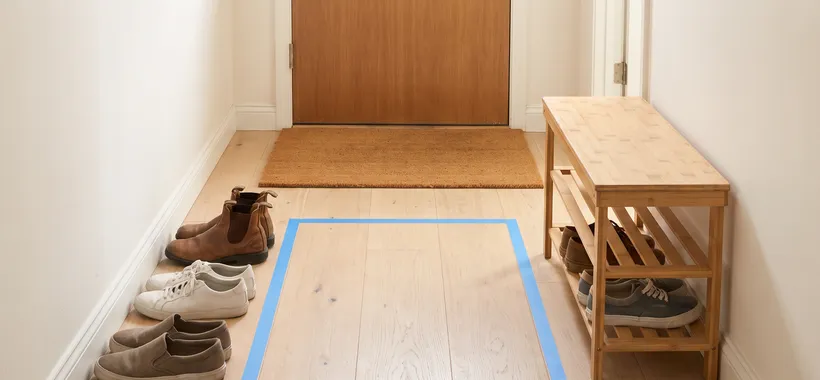
Three types of shoe storage answer three different entryway problems, and the fastest way through this decision is to name yours before comparing anything. The bench buys a seat for boots that come off at the door. The cabinet buys the disappearance of the pile. The rack buys pairs in a niche where the floor is already gone.
Before any comparisons, take one measurement: how much depth your hallway can give up and still leave the walkway usable. Then let the type match the problem, and let the numbers confirm it. One habit worth breaking first: read every stated pair count as a starting point to discount with your own largest pair.
Reading the table: depth is what each piece asks of your hallway, capacity is the figure each maker states, and anchoring is the hardware that arrives in the box.
| Pick | The problem it takes on | Depth from the wall | Capacity as stated | Anchoring |
|---|---|---|---|---|
| SONGMICS 3-Tier Bamboo Shoe Rack Bench, 27.6 Inches | Boots coming off standing up, with nowhere to sit | 11.3 in. | At least 6 pairs (SONGMICS' stated floor) | 17.8 in. tall, freestanding |
| VASAGLE Slim Shoe Cabinet with 3 Flip Drawers | The visible pile, in the narrowest slice of hallway | 9.5 in. closed | VASAGLE states 12 to 20 pairs, shoes up to US size 10 | Anti-tip kit included, anchor to the wall |
| 8-Tier Narrow Metal Shoe Rack Tower with Anti-Tip Strap | Too many pairs and almost no floor to give | 11.42 in. | Up to 18 pairs (maker's maximum) | Anti-tip straps included, anchor the 56.6 in. tower |
SONGMICS 3-Tier Bamboo Shoe Rack Bench, 27.6 Inches: for boots that come off sitting down

This is the pick for the entry with about a foot of depth to spare, where sitting down to pull boots on and off matters more than hiding the shoes. It is also the lineup's answer for rooms where a wall anchor is not happening, because the bench simply stands on the floor at 17.8 inches tall.
The two measurements a tape settles first are 11.3 inches of depth and 27.6 inches of width. Depth decides whether the walkway stays usable with the bench in place, so run the tape along the wall beside the door and subtract what already lives on that strip, the door's swing, the doormat, the baseboard. Width decides whether the bench fits the stretch of wall at all. If either number comes up short, the bench is out before seat height ever matters.
The seat is the reason this piece exists. At 17.8 inches it sits at ordinary chair height. The top is rated to 286 lb, and the two under-seat shelves carry their own separate rating of 22 lb each. The division of labor is written in the limits: people sit on top, shoes live below, and whatever sits there stays within those figures.
Beneath the seat, two open shelves of bamboo slats hold what SONGMICS counts as at least 6 pairs. Discount that figure against your own largest pair laid where it would actually sit, and treat the result as the capacity that matters. The name says 3-tier, and the honest count is a seat over two shelves, so plan for two levels of shoes, not three.
The whole unit weighs 8.8 lb. One hand moves it out for vacuuming, moves it back when the floor needs to be clear, and loads it into a car when the next place comes along.
The trade is display. Mud, laces and the pile you are tired of looking at all sit in the open, and the care is a wipe with a dry cloth. Skip it if the entry cannot spare the 11.3 inches of depth or the 27.6 inches of width, or if hidden storage is the point. The close call is with the cabinet below, which hides the pile in less depth on a wall that can take an anchor. If sitting down is the daily reality, the bench wins that exchange.
VASAGLE Slim Shoe Cabinet with 3 Flip Drawers: the visible pile, gone in 9.5 inches

This is the pick for the household whose shoes are dry when they come home and whose real problem is seeing them. Three flip drawers hide the pile behind closed fronts on a piece 9.5 inches deep, 23.6 inches wide and 47.7 inches tall. That is the narrowest slice of hallway any pick here asks for, paid for with a vertical presence on the wall instead of a horizontal one on the floor.
9.5 inches is the closed depth, and the fronts swing down into the room when a drawer opens, so the working footprint is wider than the closed one. Measure that difference in your own hallway. Stand where you would stand, open each front, and see what the arc crosses.
Inside, the drawers take shoes up to US size 10, and that ceiling decides this section more than anything else. Flats, runners and everyday sneakers up to that size belong here. Tall boots and chunky winter pairs do not. VASAGLE counts 12 to 20 pairs across the three drawers, a stated range to discount with your largest daily pair rather than a promise about yours.
The dividers adjust and come out, with three positions each, so the interior can follow the rotation. Higher-top sneakers one month, low pairs the next, all inside the same size ceiling.
The cabinet ships with an anti-tip kit, and VASAGLE instructs securing it to the wall with that kit. Treat anchoring as part of the setup for a piece this tall and shallow, not an optional upgrade. The top surface is rated to 22 lb and each flip drawer to 11 lb. Shoes belong in the drawers, and the top carries keys or a bowl within its rating.
The trade runs three ways. Concealment costs shoe-size headroom above size 10, the drawers stay light, and the install asks for a wall that can take the anchor. Skip it if there is no anchor point, if size 11 and up dominates the rotation, or if the hallway cannot spare 9.5 inches plus the front's swing. The near call on shoe size goes to the rack below, whose 11.4 inch shelf depth fits most US men's size 12.
8-Tier Narrow Metal Shoe Rack Tower with Anti-Tip Strap: for the corner with no floor to give

This is the pick for the closet side wall, the niche or the dead corner with vertical room and almost no floor to give. It measures 11.42 inches deep, 17.72 inches wide and 56.56 inches tall, and it earns its keep only when its anti-tip straps are actually anchored. That is the first thing to plan with this piece, not the last.
The floor trade is the best in the lineup. The tower stands on a strip less than 18 inches wide and the walkway in front of it stays open. What the height demands in return is nearly five feet of clear wall and a strap point behind it.
Anti-tip straps come in the box.
A frame this tall and narrow is exactly the shape that geometry makes tippy, so the straps are part of the purchase, planned before the tower arrives.
The bottom tier adjusts from 7.1 to 10.6 inches without removing the shelf, and that tier is the boot tier. Upper tiers take regular pairs. Each tier is rated to 22 lb, and 11.4 inches of shelf depth fits most US men's size 12, the edge case to check with the biggest shoe in the house.
The maker's maximum is 18 pairs. Treat it as a ceiling to check against your own pairs, not a plan to fill. With eight tiers stacked on 56.56 inches, the upper half sits above easy arm height, so daily pairs live low and the top tiers hold the ones you reach for a few times a season. Nothing is hidden either. The rack wears whatever is on it.
Adjustable feet level the tower on floors that are not level, which matters more the taller and narrower a piece gets. Skip it where no anchor point exists, because a no-drill room takes the low, wide bench instead, never this tower with its straps left in the box. Skip it too if boots must live above the bottom tier, or if the household honestly outgrows what eight tiers hold.
The measurements that settle it
Every number above means something only against your own entry, and five minutes with a tape settles most of the decision. Work down the list in order.
- Depth against the walkway, measured from the wall to the front edge. 9.5 inches for the cabinet, 11.3 for the bench, 11.42 for the rack.
- The open and standing state. The cabinet's dropped front, the entry door's swing, baseboards and floor vents all take bites from the same strip. Measure with the front open and the door doing what it does.
- The space a person occupies standing at the piece, choosing shoes, often on one foot.
- Wall height for the 47.7 inch cabinet and the 56.56 inch tower, plus whatever already hangs on that wall.
- The tower's minimum door width of 17.72 inches, if it has to pass through a doorway to reach its corner.
- Your largest daily pair, held against each pick's compartments. The cabinet stops at US size 10, the tower's tiers run 11.4 inches deep, and the bench's deck runs 11.3 inches deep.
Then the one test that turns all of it into a lived answer.
Tape the footprint on the floor, open whatever opens over the tape, and walk the normal path, including the 2 a.m. one, for a day. The tape shows what numbers cannot, whether the piece asks the walkway for more than the walkway has.
Anchoring, and what to do if you can't drill
Two of the three picks treat the wall as part of the purchase. The cabinet ships with an anti-tip kit, and VASAGLE instructs securing it to the wall. The tower ships with anti-tip straps for its 56.56 inch frame. Both pieces are tall or shallow enough that tipping is a geometry problem rather than a care problem, which is why the anchor is a setup step and never an upgrade.
The bench is the third case. It is 17.8 inches tall and freestanding, and the anchoring question does not decide it.
If drilling is not happening in your home, the supported answer is a different piece, low and wide, not the cabinet or the tower with the anchor skipped. In this lineup that piece is the bench. A tall unit left unanchored is not a smaller risk. It is the same risk with its safety step removed.
RVs and campers add a transit problem that no pick here solves with hardware. Place storage low and stable, and check that no flip front or drawer can swing open into a walkway while the vehicle moves.
What the pair counts really hold
A stated pair count is only as big as the shoes it assumes, so every figure here is a starting point rather than an answer. The method is one move. Put your largest daily pair where it would actually live, count what fits around it, and let that number drive the decision.
Applied to this lineup: the bench's two-shelf deck measures 27.6 by 11.3 inches against SONGMICS' stated floor of at least 6 pairs. The cabinet's drawers accept shoes up to US size 10 against VASAGLE's stated 12 to 20 pairs. The tower's tiers run 11.4 inches deep and 17.72 inches wide against the maker's maximum of 18 pairs. One household's count can land well under all three figures and another's right on them. What the discounting replaces is the habit of buying by the biggest number on the box.
Where wet shoes go
Closed storage and a soaked pair conflict on simple physics. Sealing damp shoes in a box holds moisture and odor against the shoe and the cabinet. The practical sequence is dry first: a pair that comes home wet spends a day on an open tier, on the bench's slats, or in a tray by the door, and moves into the cabinet only once it is dry.
That routine is the cost of choosing concealment in a wet entry, and it is a workable one. The bench's slats and the tower's open wire tiers are the airing spots in this lineup. The cabinet is the piece the routine protects.
Questions this lineup answers
What if I can't drill into the wall?
The bench is the lineup's freestanding piece, so it is the no-drill answer. The cabinet and the tower stay anchored or stay unbought. Neither turns into a no-drill piece by leaving its hardware in the box.
Will tall boots fit?
The cabinet's drawers take shoes up to US size 10, so most boots are out for that piece. On the tower, the bottom tier adjusts from 7.1 to 10.6 inches and is the boot tier. The upper tiers stay for regular pairs.
Which one moves easiest at the next place?
The bench weighs 8.8 lb and goes out the door in one piece. The tower comes flat and assembles with the included wrench. The cabinet is a 42.8 lb flat-pack that, once anchored, tends to stay put. The move favors the light pieces, and the cabinet rewards staying.