
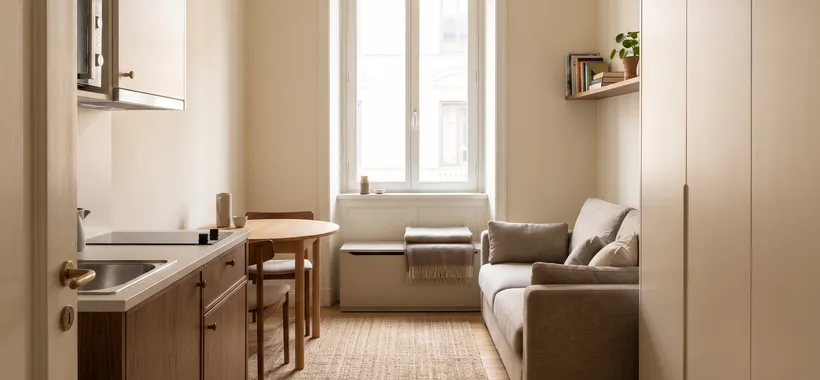
Sometimes. A micro apartment is worth it when two things are true at once: the all-in monthly cost, not just the rent on the listing, beats the alternative you would actually sign, and the life you actually live fits inside the square footage without renting the overflow somewhere else. Neither condition is automatic, and neither is permanent.
The rest of this article is the test: which two apartments you are actually comparing, what belongs in the monthly number, what the location premium is really buying, where small homes generate costs the lease never shows, and how to reach a sign-or-walk answer before the calendar decides for you.
When the micro unit wins, and when it does not
| Your situation | The micro unit tends to win when | It tends to lose when |
|---|---|---|
| Commuter who uses the neighborhood | The premium replaces a car or commute hours you pay today, and the all-in number still beats the alternative. | Transit is thin, the commute was never long, or the neighborhood is scenery you pay for and drive past. |
| Remote worker | The all-in number still wins after the desk is paid for, at home or elsewhere. | The premium was priced around a commute that no longer exists, and the desk now owns the only room. |
| Couple | Both schedules and both sets of belongings genuinely fit the engineered storage. | One person's stuff already fills the unit, and privacy moves out with the second dresser. |
| Pet owner | The floor plan already gives the pet its circulation, and the fees are priced into the tally. | Pet rent and deposits stack onto a plan with no spare floor for a crate and a food station. |
| Short, known stay | The unit fits a stable stage of life, and nothing on the inversion list is on its way. | The term is one you can grow out of, and next year's life does not fit this year's floor plan. |
Which two apartments are you actually comparing?
Before any arithmetic, name the comparison. There are two honest versions of this decision, and they answer different questions.
The first is a micro unit versus a studio or small one-bedroom in the same neighborhood. That comparison asks whether the small unit is priced fairly against its local alternative, and it turns mostly on the two buildings and the block between them. The second is small-and-central versus bigger-and-cheaper-farther-out. That one asks whether location is worth square footage, and it turns on your commute, your car, and how you spend your evenings.
Mixing the two produces conclusions that sound decisive and mean nothing. A micro apartment is not "cheaper than a one-bedroom in the suburbs." It may be cheaper per month if the numbers line up, but the suburban one-bedroom is not competing for the same decision. It is competing with your commute, while the neighborhood studio is competing with your furniture. Cheaper than what, and against which alternative, is the whole question.
So write down the two actual candidates before any number appears. A micro downtown and a studio twelve blocks away is the first comparison. A micro downtown and a two-bedroom thirty minutes out is the second. Everything after this depends on which one you are running.
What a micro apartment really costs per month
The number that decides this is not the rent on the listing. It is the all-in monthly cost, and the listing never shows it. Build the same line list for both candidates:
- base rent
- utilities, with a note on what the building actually includes
- internet
- renters insurance
- transit, or a car with parking
- laundry
- storage, on site or off
- furniture the unit forces you to buy
- any mandatory fees the building attaches, such as an amenity fee, a community fee, or a charge for the app that books the laundry room
Furniture that fits is a cost line, and small units generate it. A bed frame with no drawers pushes a dresser onto a floor that has no room for one. A unit without a table forces a choice between eating out and a fold-down purchase. Neither line is large on its own. Both belong in the monthly number, because the bigger alternative usually includes them in its footprint for free.
Utilities deserve one honest check before the rents get compared. Very small units can be cheap to heat and cool, but a single exterior wall with big windows, or a top-floor unit, can spend that saving for you. What the building includes matters more than the size. Heat, hot water, electricity. An all-inclusive micro can beat a cheaper quoted rent next door once the real bills are in the tally, so ask what the rent covers before you write down either number.
Then run the per-foot lens, as arithmetic on your own quotes and nothing else. Suppose a micro rents for $1,200 at 250 square feet while a studio nearby asks $1,500 at 500. The micro wins the monthly line by $300 and loses the per-foot line, $4.80 against $3.00. Both numbers are true at once. The monthly difference is what you pay. The per-foot gap is the price of the location and the smallness combined, and the next section decides whether that price buys anything.
Renters pay the bill, not the metric. The per-foot number exists to expose what you are paying for. It should not vote the unit down on shock, and it should not wave the unit through on monthly savings either.
What the location premium is buying, and when it buys nothing
A small-and-central unit charges for the address. Whether that charge is worth paying depends on what the address replaces, and the useful answer prices the replacement in your own dollars and hours.
Start with the car. If living near real transit lets you sell one, the premium is competing against the whole car: the payment, the insurance, the parking, the maintenance, the fuel. If the transit only lets you drive somewhat less, the premium is competing against a few gallons a week. Those are different trades, and only one of them usually has the money to cover a square-footage gap.
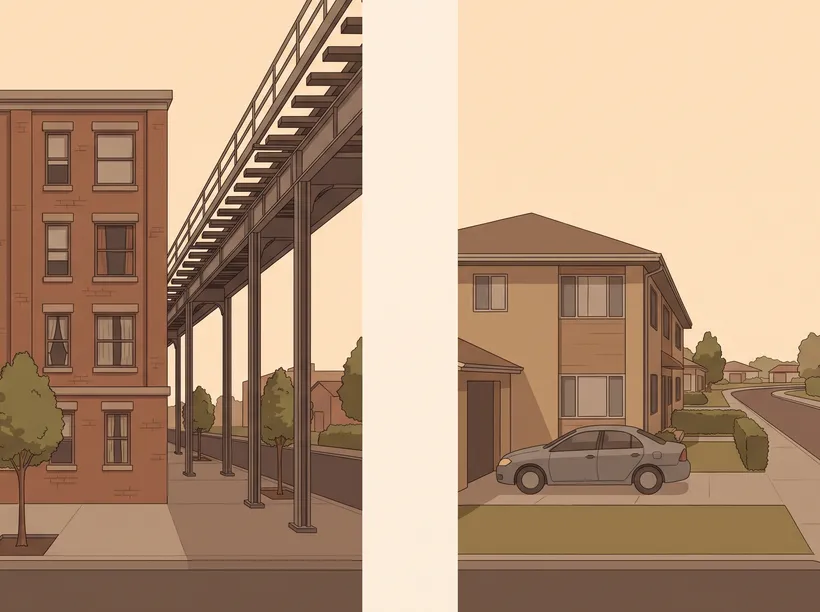
Then the commute. An hour a day is five hours a week, every week of the lease. Price those hours however is honest for you, as money you would have to earn or as evenings you would get back, and put the number next to the rent gap. For a lot of renters this is the main thing the premium buys. A second bedroom's worth of rent that buys back a commute is a real trade. The same rent spent on a neighborhood you only sleep in is not.
Then the neighborhood itself, priced by use rather than by brochure. A grocery you walk to, a laundromat around the corner, a park you actually sit in, friends close enough to see on a Tuesday. Amenities you use weekly are doing work the bigger unit's square footage would otherwise have to do. Amenities you pass on the drive home are scenery, and scenery does not cover rent.
Run the failure checks in the same pass. Do you actually commute, or is the job remote? Is the transit frequent and on the line you need, or does "near transit" describe a bus that would not get you to work on time? Do you use the neighborhood, or do you just pay for it? Remote work deletes the commute the premium was buying. Weak transit keeps the car, so nothing gets replaced. Thin amenities mean the address is a view of a life, not a life.
None of this makes the premium a mistake. It makes it a purchase, and a purchase is fine when you can name what you bought.
Where a small home creates costs the lease never shows
A unit that is too small for your life does not just feel small. The overflow goes somewhere, and the overflow bills you.
Storage is the usual first stop. If the winter coats, the suitcase, and the gear you only use seasonally do not fit, they end up in a storage unit whose monthly bill quietly cancels part of the square-footage saving. Work is the second stop. If the unit cannot host your job, the job moves to coffee shops and coworking desks, and those charge by the month too. Spending is the third stop and the least visible. A home too small to be in pushes you out of it, and restaurants and entertainment absorb the difference one small charge at a time.
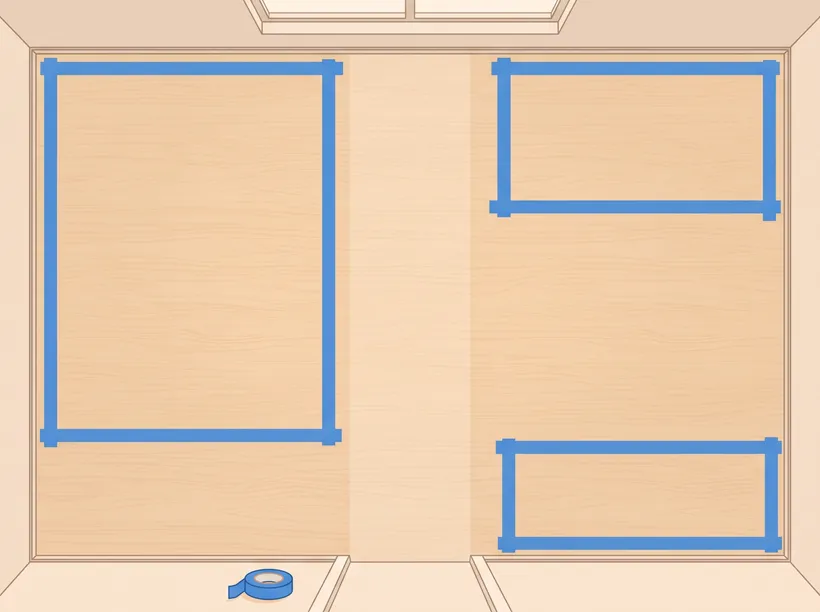
The footprint test prices all of this before you sign. Tape the bed, the desk, and the wardrobe on the floor of the room you live in now. Walk the path that remains. Then subtract that path from the candidate's floor plan, and whatever no longer fits goes on the cost side of the tally at its real monthly price: a storage unit, a replacement piece of furniture, a desk somewhere else.
Guest capacity belongs in the same test, priced by your actual habits rather than an idealized social life. If you never host, a unit that cannot seat four costs you nothing. If you host twice a month, the unit costs you the living room every visit, and eventually it costs the hosting. Neither reader is doing small space wrong. The tally just needs the honest version.
Tour the building, not only the unit. In buildings built around small units, shared rooms do some of the unit's work. A real work lounge can replace the desk at home. Bike storage and a package room can take back a corner the unit was about to lose. Treat storage inside the unit as a requirement rather than a bonus. A beautiful micro with nowhere for the vacuum is a beautiful micro with a vacuum in the shower.
Micro apartment or studio: does the label change the math?
A studio is a conventional small plan, one room doing every job a home has. A micro apartment is engineered for small from the first sketch: built-in storage, a compact kitchen, convertible furniture, sometimes a bed that folds into the wall. Both are fully self-contained, private bathroom included, and either one holds a lease for one household.
The label changes the layout you are walking into, not the decision. The engineered unit may already solve storage problems a downsized standard plan never thought about. The standard plan may have an ordinary room shape your existing furniture fits without a fight. Either way, both go through the same tally, the same footprint test, and the same break-point check below. Classify the listing in ten seconds and get back to the numbers.
When the deal inverts
Some situations do not merely make the micro apartment more expensive. They move the square footage to the wrong side of the ledger.
Two people. One person's belongings are already the whole unit, and the second arrives with a full set of their own. Privacy gets repriced too. The things two people used to do in separate rooms now happen in the same room, or wait.
A pet. Pet rent and deposits add their own line to the tally, and a dog converts floor space from storage to circulation. The corner that held your things now holds a crate, a food station, and the world's least flexible pile of toys.
Full-time work from home. If the job lives at home five days a week, the desk owns the room. The 2 a.m. walk from bed to bathroom now runs past the office, and the office never closes. The commute the location premium would have been buying does not exist, so the address is competing with a desk for the same floor.
Fixed volumes. Storage-heavy hobbies, medical equipment, and mobility needs do not negotiate. Clever furniture folds beds and tables away. It does not fold away a wheelchair, a keyboard instrument, or the equipment a condition requires.
Long stays. A unit that suits this stage of your life can be a poor deal for the next one. The honest answer often carries a time bound, a lease term you can grow out of. Name which stretch you are signing for before you decide what the unit is worth.
How to decide before you sign
At this point the test is mostly assembly. Run it in order on the two candidates you named at the start:
- Build both all-in monthly numbers from the line list, using what each building actually includes.
- Compute both per-foot numbers, and read the gap between them as the price of location.
- Price what the premium replaces (the car, the commute hours, the neighborhood you actually use), then run the failure checks.
- Run the footprint test, and add whatever does not fit to the losing tally at its monthly cost.
- Check the inversion list. A partner, a pet, a full-time desk, a fixed volume, or a long horizon changes the answer before the arithmetic does.
- Land on sign or walk, and write down the exit condition, the specific change that would flip the answer, such as a job back in an office, a second person, or a storage bill that crosses a line you set.
The checkpoints are observable: two tallies computed, footprints taped on a floor, a commute priced in hours, inversions checked. If any of those is still a feeling rather than a number, the decision is not finished.
The exit condition is the step most people skip, and it is what makes the decision cheap to revisit. It is not a plan to leave, and it is not a lease term. It is the line where the answer changes, written down while the choice is still yours to make. A small unit chosen with a named exit condition is a measured trade. The same unit chosen silently is a bet you forgot you placed.