
Title: Micro-Storage Economics: Value Beyond Square Footage
Description: Why micro-storage is worth more than square footage, examine costs, pricing, consumer behavior, and ROI strategies to maximize tiny-space value.
Key takeaways
- Why Micro-Storage Matters in Tiny Living
- Valuing Space by Function, Not Square Footage
- Real Costs and Smart Pricing for Micro-Storage
- How People Use and Pay for Small-Space Storage
There was a time I thought more square footage was the only path to peace of mind. Basements, attics, closets you could disappear into on a long weekend-storage used to be pure quantity. The tiny-home movement changed that. Now the smarter question is not how many square feet you own, but how those inches work for you: how they shape light, movement, and the little pockets of calm that get you through the day.
This post is about seeing micro-storage as an asset, not a compromise. I’ll give you a tight overview, explain why value goes beyond raw square footage, walk through real costs and pricing choices, look at how people actually use storage, and share tactics to get better returns on your tiny-space investments. Expect practical design moves, sensory tricks that make a space feel bigger, and concrete financial thinking for tiny homes, studios, camper vans, and small apartments.
Keep reading and you’ll start measuring storage by usefulness and beauty instead of inches. This is about making every nook sing with purpose, light, and ease so your small place feels larger, cleaner, and richer in experience.
Why Micro-Storage Matters in Tiny Living
Micro-storage isn’t an afterthought. In a small home each cubby, shelf, and under-seat drawer becomes part of your daily routine. Treat storage like sculpted negative space that guides movement, catches light, and creates calm in the morning and rest at night. When it’s done right, storage disappears visually and stops the clutter from yelling at you.
Tight quarters amplify friction. One misplaced mug, a crowded entry, or an awkwardly deep cabinet can make a 200 square foot studio feel suffocating. Micro-storage fixes that by prioritizing accessibility, visual flow, and purposeful form. Store by routine: daily items stay in sight and within reach, while infrequent things slip into clever, out-of-the-way pockets.
From here we’ll move into the numbers and the decisions. I’ll reframe valuation beyond raw area, cover costs and pricing, look at how people behave, and pull it together into ROI strategies. The aim is to turn compactness into a design advantage so every stored item contributes to a lighter, brighter, more efficient home.
What micro-storage looks like in practice
Micro-storage is not just one tiny closet. It’s a network of purposeful pockets: a drawer that hides a charging station, a shallow cabinet for seasonal linens, a loft shelf for weekend gear, a bench that stores shoes and doubles as seating. Think choreography. Each piece helps people and objects move with ease so the room keeps its rhythm. When you place these elements with light and sightlines in mind, they feel integral instead of tacked on.
Why value goes beyond measurements
Square footage matters, but lived value comes from experience. A two-foot-deep niche at eye level can beat a six-foot basement if it saves five minutes every day and keeps counters clear. Tenants and buyers pay for convenience, for an entryway that works, and for a kitchen that lets them cook without hunting. That premium shows up as higher willingness to pay, faster rentals, and lower churn. I’ve seen clever storage pay back in months as occupancy and satisfaction climb.
Key design and economic levers
Light and sightlines. Keep storage low or open near windows so light can pass through. Translucent cabinet fronts or shallow shelving preserve visual depth.
Vertical layering. Tall, narrow units free up floor area and lift the eye.
Multi-function. Combine seating, surface, and storage so every cubic inch earns its keep.
Accessibility. Put high-frequency items where hands reach without a step.
These moves reduce perceived clutter and increase perceived space.
Economically, think in turns and convenience. Value follows frequency and ease of access. Storage that reduces daily friction is worth more than deep, cold boxes. Operating costs matter too. Modular, low-maintenance systems keep long-term expenses down and boost net return.
Quick action steps you can use now
- Audit your daily routine: pick three things you grab most and move them within arm’s reach.
- Turn one underused vertical plane into layered storage with integrated lighting to preserve flow.
- Swap a bulky cabinet door for an open shelf or a translucent panel to increase perceived depth.
- Track turnover or tenant satisfaction for three months after the change to measure impact.
I treat small spaces like stage sets. Every storage decision should support movement, amplify light, and invite a slower, clearer life. That is the real currency of micro-storage.
Valuing Space by Function, Not Square Footage
Square footage is a blunt instrument in small-space design. What changes your day is the quality of that space: sightlines that create air, storage that keeps surfaces clear, and ergonomics that let you reach what you need without a circus move. Valuing space this way puts function, light optimization, and sensory ease first.
For tiny-space dwellers perceived space often beats measurable space. A well-lit alcove with custom shelving and concealed lighting can feel more usable than a larger room with poor storage. Designers and owners should evaluate storage by retrieval time, multi-functionality, visibility, and how it contributes to calm.
Next we’ll turn those ideas into practical metrics and decision tools. You’ll learn to translate sensory and functional value into defensible choices when budgeting, selling, or upgrading. Shift from square footage to experience and you invest in everyday wins, not just a bigger number on a floor plan.
Beyond square feet. How to measure what really matters
Value in a small space is lived, not listed. Move from raw area to usable interactions. Count reachability, visibility, and turnover. Reachability is whether you can grab something without bending or moving other objects. Visibility is whether you see it at a glance. Turnover is how often it passes through your hands. These three metrics predict daily satisfaction far better than square footage.
Make it concrete. Score each storage zone 1 to 5 for reachability, visibility, and turnover. Multiply the three scores for a usability number. Higher scores point to the high-value pockets you should protect or highlight when marketing a space.
Quick valuation exercises you can run this afternoon
- Time-savings audit. Over a week, watch three routines-morning coffee, leaving the house, and food prep. Note how many extra minutes you spend hunting or shifting things. Turn saved minutes into dollars using a personal hourly rate (pick a modest one). Multiply by 30 for monthly time value. That’s your convenience premium.
- Space substitution test. Pick one deep cabinet and one shallow, well-lit niche. Move the same frequently used items into each and live with them for a week. Which was easier? Which looked and felt cleaner? That qualitative verdict is marketable.
- Payback math. Add up retrofit costs for a high-usability change (lighting, sliders, custom shelving). Divide by expected monthly uplift-higher rent, faster bookings, or your time-value. That gives months to payback. Aim for under 18 months for most small-space projects.
How to present micro-storage so it adds real monetary value
Staging is sensory. Photograph a drawer half-open with warm LED light and neatly labeled containers. Record a 10-second clip showing how a routine flows smoother because of a drawer or lift bed. Those little scenes sell convenience. Renters and buyers don't pay for cubic inches; they pay for calm mornings, quick meals, and a home that feels roomy in daylight.
Rule of thumb: prioritize interventions that raise your usability score and shave daily friction. Those changes create measurable rent premiums, faster turnover, and happier occupants. In small spaces that is where true value is made.
Real Costs and Smart Pricing for Micro-Storage
Investing in micro-storage is about choices: materials, labor, and longevity. A custom built-in bench with hidden compartments costs more up front than modular bins, but it can save time every day, reduce wear on other furniture, and lift the whole room visually. Real costs include purchase or construction, installation complexity, maintenance, and the opportunity cost of losing flexible floor area.
Pricing needs context. For ready-made systems compare cost per usable inch or per accessible cubic foot instead of sticker price. For custom work factor in contractor time, finish quality, and how the piece plays with light and circulation. If you’re monetizing storage-renting a nook in a co-living setup or staging a tiny house-consider turnover, fees, and perceived value.
Later I’ll share budgeting frameworks and cost-saving hacks: materials that look luxe on a budget and DIY tweaks that preserve resale value. You’ll get clear guidance on when to splurge and when to save so your spending delivers both tactile joy and measurable returns.
Cost components to budget for
Think of a micro-storage project like a small theatrical set. There are visible elements and hidden costs. Hard costs include materials (plywood, hardware, lighting), bespoke joinery labor, and any structural work. Soft costs cover design time, permits if required, and delivery. Ongoing costs include maintenance, replacement lighting, and occasional hardware repairs. Finally, factor in opportunity cost: days the unit is offline during a retrofit equals lost rental income.
Be specific. A simple built-in bench might use $200 in materials, two days of carpentry, and a small LED strip. A custom lofted system will multiply those numbers and may require structural reinforcement. Track each line so you can compare options objectively.
Pricing strategies that capture actual value
Price storage by the user benefit it delivers, not raw cubic inches. I think in three tiers: basic (shelves and hooks), enhanced (soft-close drawers, hidden charging), and premium (integrated lighting, modular inserts, multi-function furniture). Charge incremental premiums for convenience features such as accessible placement and integrated lighting because they change daily routines.
If you rent, run short experiments. Offer a modestly higher rate for units with premium micro-storage and track booking speed and reviews. If selling, lead with sensory descriptions (warm-lit niche, pull-out pantry) and a clear practical claim (faster mornings, more usable prep space). Buyers respond to reduced friction as much as to square footage.
How to evaluate ROI quickly
Make a simple spreadsheet with three columns: upfront cost, annual operating cost, and estimated annual uplift (higher rent, faster sale, or time saved valued at a modest hourly rate). Divide upfront plus first-year operating cost by estimated annual uplift to get years to payback. Aim for clarity rather than false precision. If something costs $1,500 and you estimate $600 a year in uplift, that’s 2.5 years to recoup.
Run a sensitivity check. What if the uplift is 20 percent lower? If payback still looks reasonable, proceed. If not, scale back to the highest-impact, lowest-cost interventions.
Design choices that control costs
Light. Integrated LED strips cost little and transform perception. Prioritize lighting near storage rather than expensive face-frame joinery.
Materials. Use plywood with edge banding for a warm look at lower cost than solid wood.
Modularity. Choose inserts and drawer systems that can be reused if you move.
Small sacrifices in finish often buy big gains in flexibility and resale value.
One last note: spend where occupants touch and see most. Tactile, well-lit surfaces sell feelings and save time. A space that feels effortless will always command a premium.
How People Use and Pay for Small-Space Storage
Human behavior decides whether storage succeeds. People prioritize convenience, visibility, and rhythm. A sliding pantry that keeps snacks hidden but within reach will get used. A high, hard-to-access loft bin will become a graveyard for forgotten things. Understanding patterns of use-from daily routines to seasonal rotations-lets you design storage people actually use and value.
Consumer choices shape pricing and product development. Tiny homeowners often invest in bespoke built-ins for long-term comfort, renters favor modular and portable systems, and vanlifers prioritize lightweight, multi-use components. Subscription models and shared micro-storage services are appearing too, shifting costs from big capital outlays to recurring fees. Know these preferences so you can match solutions to lifestyle and budget.
Later I’ll map behavior to design: how to place items by frequency of use, create visual cues that promote tidiness, and build small rituals that maintain order. Read your own habits and let that data guide investments so storage feels intuitive and worth every penny.
People do not buy cubic inches. They buy easier mornings, clearer sightlines, and reassurance that their small home will not betray them at 7 a.m. Understand those impulses and you can design and price micro-storage that feels indispensable, not ornamental.
Who shops for micro-storage
There are patterns. Young professionals prize quick-access solutions that save commute minutes and reduce decision fatigue. Creative hobbyists need flexible pockets that adapt as their tools change. Small-family renters want durable, low-maintenance options that hide mess and make tidy feel effortless. Camper van owners prioritize weight, modularity, and multi-function elements that serve sleep, storage, and cooking. Think in behaviors rather than demographics to match solutions to real use.
What actually drives choices
People respond to reduced friction, visible order, and sensory cues that signal care. Clean finishes, consistent hardware, and subtle lighting suggest quality and ease of use. There is a psychological premium for predictability; buyers will pay extra to avoid frequent small annoyances. Social proof matters too. Listings or profiles that show real users living with the storage, or short testimonials about time saved, increase trust and willingness to pay.
Practical aside: people overestimate how much they will sort someday. Give them systems they can live with now.
Design and marketing tactics that follow behavior
- Stage routines visually. Short clips or photos showing a morning task completed in sequence sell the benefit faster than specs.
- Offer tactile reassurance. If possible, let people touch samples (hardware feel, drawer glides). Sensory trust converts.
- Emphasize adaptability. Show how inserts or shelves can be reconfigured. Flexibility reduces buyer anxiety about future needs.
- Use clarity in descriptions. Lead with the daily payoff (faster breakfasts, less clutter), then list features. People read benefits first.
- Run small experiments. Test a modest price premium for units with storage upgrades and compare booking velocity or listing clicks. Adjust based on behavior, not gut.
Quick tips you can implement now
- Add a short video showing a common routine using the storage. Motion sells fit better than still images.
- Create three small labels or photo-cards that explain the intended use of specific pockets. It reduces decision friction for new occupants.
- Offer a simple swap policy for modular inserts. Flexibility lowers purchase resistance.
Micro-storage succeeds when it aligns with habit, not ego. Design for how people actually live, then make that living visible. The rest follows.
Strategies to Maximize Return on Micro-Storage
Optimizing ROI for micro-storage is about more than recouping cost. It means maximizing daily utility, preserving aesthetic value, and increasing resale appeal. Effective strategies combine clever design, light management, and multipurpose thinking. Think convertible furniture, vertical systems that celebrate rather than hide items, and finishes that reflect light to enhance perceived volume.
ROI shows up as time saved, fewer replacement purchases, increased livability, or improved marketability if you sell or rent. Tactics include modular systems that adapt as needs change, neutral textured finishes to keep the space feeling open, and placing high-use items at ergonomic heights. Small investments in lighting and consistent hardware often punch above their cost in perceived value.
Below are tactical checklists and examples you can apply immediately. You’ll get templates to assess payback timelines, ways to prioritize upgrades, and creative monetization ideas for shared living situations. The goal is to make each cubic inch work harder so your tiny space delivers big returns in comfort, efficiency, and style.
Prioritize by touchpoint value
Map your space by how often a surface or pocket is used. I call this a touchpoint map. Draw the room and mark the three spots you interact with most each day. Assign a frequency score (1 to 5) and a visibility score (1 to 5), then multiply them to find high-impact zones. Spend on those first. A $300 fix to a high-touch entry or prep surface often beats a $1,500 loft upgrade that lives out of sight.
Start small. Swap a heavy cabinet door for a tactile pull and a soft-close hinge. Add a thin warm light over a shelf. These tweaks reclaim moments rather than inches.
Run a 90-day ROI sprint
Set a short experiment. Pick one intervention, estimate its cost, and set three metrics to track: perceived value (survey or short review), use frequency (note weekly touches), and financial uplift (rent increase or faster bookings). Reassess at 30, 60, and 90 days. If your tweak shortens a routine and boosts positive feedback, it earns a place in future budgets.
Example: an $800 modular storage bench that raises nightly rental rates by $25 equals roughly 32 months to recoup. If guest stays increase and reviews call out the convenience, payback accelerates.
Cut operating drag to improve net return
Think lifecycle, not just sticker price. Choose finishes that clean easily, hardware that lasts, and lighting that is LED and dimmable. Modular pieces that move with you preserve value. A slightly tougher material that avoids frequent touch-ups will save time and money over years. I favor minimal seams and accessible hardware for quicker maintenance.
Turn sensory upgrades into pricing power
Photography sells mood. Capture the way light spills across a neatly organized pull-out or film a 10-second clip of someone moving through a morning routine. Describe those scenes in listings: calm mornings, quick prep, and the sensation of stretch in a small room. These cues let potential occupants imagine a better daily life, and they will pay for it.
Small spaces reward smart bets. Spend where hands meet surfaces, test quickly, lower operating costs, and tell the sensory story. Do that and your micro-storage becomes a profit center, not just a place to hide things.
Conclusion
Micro-storage is more than a compact closet. It’s a design strategy that trades raw square footage for usability, calm, and daily delight. We looked at valuing beyond measurements using simple metrics (reachability, visibility, turnover) and saw how design levers like light and sightlines, vertical layering, and multi-function furniture translate into higher perceived value. We also covered the economic side: cost components, pricing by user benefit across basic, enhanced, and premium tiers, and payback math so your choices line up with measurable returns.
If you want one clean plan, start with a touchpoint map and a time-savings audit. Map where your hands go most, score those zones, and pick one high-impact fix you can do in a weekend. Favor low-cost, high-sensory upgrades first: integrated LED strips, translucent fronts or open shelves near windows, a storage bench that doubles as seating, and modular inserts that travel with you. In my projects those tactile, visible changes shorten routines, improve photos and listings, and often begin paying back within months. Run a 90-day ROI sprint. Track perceived value, use frequency, and any financial uplift. Iterate based on simple data, not guesswork.
Now take action. Audit three daily items and rehome them within arm’s reach. Convert one vertical plane into layered storage with lighting or swap a bulky door for an open shelf. Test the result for 30 to 90 days and note time saved and how the space feels in daylight. Share your touchpoint map or 90-day findings in the comments, or reach out if you want design feedback. Small, sensory changes will make your tiny space feel larger and richer, and they will turn micro-storage from a compromise into a true asset.
Related product reviews
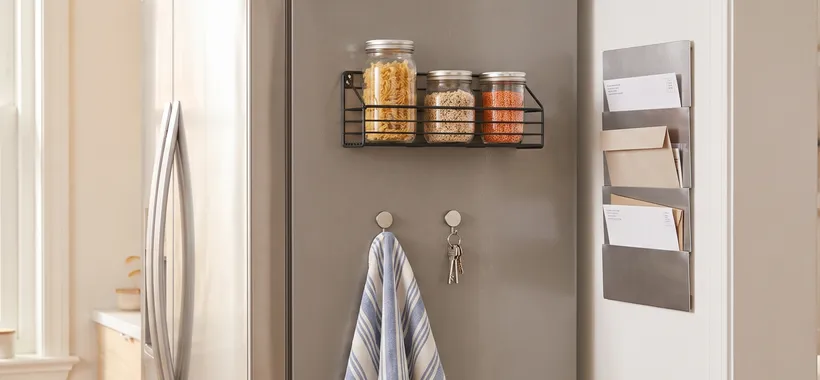
Best Magnetic Modular Storage for Small Space Living
Match magnetic shelves, file pockets, wall panels, and hooks to the metal surface you actually have. Five picks for kitchen, office, entryway, and hanging jobs, plus what a weight rating really holds and what to measure first.
Read more
Best Over-Door Multi-Hook Organizers for Small Space Entryways
Discover over-door multi-hook organizers that maximize vertical space, with renter-friendly installation to keep coats, bags, and umbrellas off floors.
Read more